

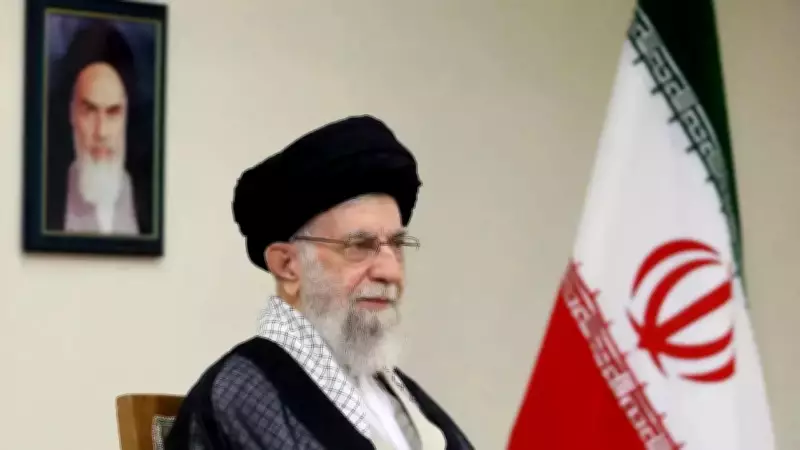
Iranian Media Denies Reports of Supreme Leader's Wife's Death Amid Ongoing Conflict
Iranian state media issued a clarification on Thursday, stating that the wife of the late Supreme Leader Ali Khamenei is alive, directly contradicting earlier reports that claimed she had perished in the February 28 attack attributed to the United States and Israel. This announcement came hours after Mojtaba Khamenei, the new supreme leader of Iran, made his first public statement addressing the war and acknowledging his father's death.
Mojtaba Khamenei Confirms Family Losses in Airstrike
In his inaugural address, Mojtaba Khamenei provided a personal account of the aftermath of the strike that killed his father, Ali Khamenei, a pivotal figure in Iran's political and religious landscape for decades. He revealed that he had personally viewed his father's body, describing the experience as an honor and referring to his father as "a mountain of steadfastness." Furthermore, the Iranian leader confirmed that several family members were killed in the airstrike, including his wife, one of his sisters, his niece, and the husband of another sister. These remarks stand as some of the most direct confirmations from Iranian leadership regarding the casualties resulting from the attack.
Details Emerge on the February 28 Strike in Tehran
According to multiple media reports, Ali Khamenei was killed on February 28 in a rapid, coordinated strike in Tehran, described as the culmination of months of intelligence tracking and years of covert surveillance. The attack occurred at approximately 9:40 AM local time, with long-range missiles striking a leadership compound in the Iranian capital. The near-simultaneous strikes, executed within roughly a minute, reportedly resulted in the deaths of Khamenei and several senior figures within Iran's political and security establishment.

Reports citing US and Israeli officials indicate that the operation relied on extensive intelligence gathering involving the Central Intelligence Agency and Israeli intelligence networks. US intelligence had allegedly monitored Khamenei's movements for months, developing a detailed "pattern-of-life" profile to understand his habits and relocation patterns during crises. A breakthrough came when intelligence sources learned of a meeting of senior Iranian officials scheduled at a leadership compound in central Tehran, which Khamenei was expected to attend.
Originally planned as a night operation, the timing of the strike was adjusted to the morning once officials confirmed the Iranian leader would be present above ground. Israeli fighter jets reportedly took off around 6 AM Israel time, carrying long-range munitions toward Tehran. The missiles then hit multiple locations in the compound almost simultaneously, catching the leadership group off guard.
Regional Tensions Escalate Amid Ongoing Conflict
These developments unfold against a backdrop of heightened tensions in the ongoing conflict involving Iran, the United States, and Israel. Both sides have been exchanging warnings and military strikes across the region, contributing to a volatile atmosphere. In related news, Saudi Arabia intercepted a drone headed toward the Shaybah oil field, while Israeli forces struck 10 Hezbollah targets in Beirut. Iran has also issued warnings to US tech firms, including Google, Amazon, Microsoft, and Nvidia, labeling them as "legitimate targets." Additionally, Iran has cleared Indian-flagged ships for safe passage in the Hormuz Strait, while imposing curbs on vessels from the US, Europe, and Israel.
The situation remains fluid, with international observers closely monitoring the escalating hostilities and their implications for global stability.






