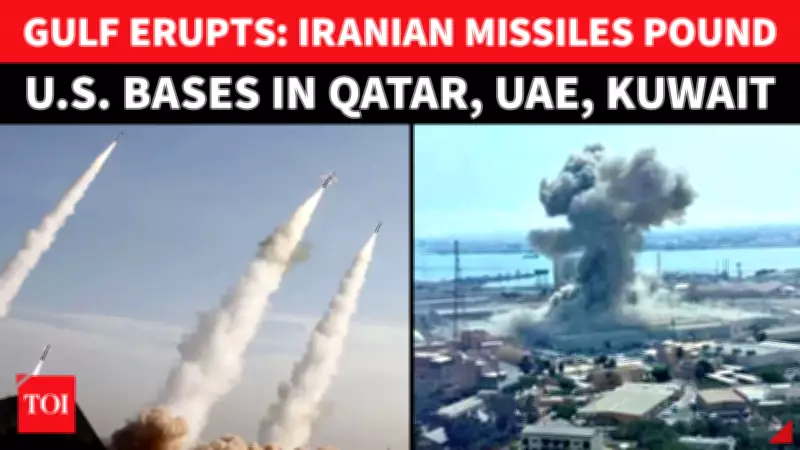
Iran Launches Unprecedented Attack on US Military Bases Across Gulf Region
In a significant escalation of regional tensions, Iran's Islamic Revolutionary Guard Corps (IRGC) has executed a massive coordinated strike targeting multiple United States military installations throughout the Gulf region. The attack, described as one of the largest of its kind in recent years, involved a sophisticated combination of ballistic missiles, cruise missiles, and unmanned aerial vehicles (drones).
Targeted American Installations
According to official statements from Iranian state media, the precision strikes were directed at three critical US military bases that serve as key operational hubs for American forces in the Middle East. The targeted facilities include:
- Al Udeid Air Base in Qatar - The largest US military base in the region and headquarters of US Central Command's air operations
- Al Dhafra Air Base in the United Arab Emirates - A strategic installation hosting advanced US fighter aircraft and surveillance systems
- Ali Al Salem Air Base in Kuwait - A crucial logistics and support base for US operations throughout the region
Reported Damage and Military Impact
Iranian military sources claim the attacks successfully damaged vital military infrastructure at these installations. The reported damage includes:

- Advanced radar and early warning systems critical for air defense
- Specialized facilities for drone operations and command centers
- Strategic fuel depots that supply American aircraft and vehicles
- Significant sections of operational runways, potentially limiting air operations
"This represents a calculated escalation in Iran's military capabilities and willingness to directly challenge US military presence in the region," noted regional security analysts monitoring the situation.
Regional Context and Escalating Tensions
The attacks come amid heightened tensions between Iran and the United States, with both nations engaged in a protracted conflict that has increasingly involved regional allies and proxies. The Gulf region has become a focal point for these tensions, with multiple nations hosting significant US military assets.
Security experts suggest that Iran's decision to launch simultaneous strikes across three different countries represents a strategic shift in their military doctrine, demonstrating both improved coordination capabilities and a willingness to engage multiple targets simultaneously.
International Response and Future Implications
While official US military responses to the specific damage claims remain pending, the attacks have undoubtedly raised concerns about regional stability and the potential for further escalation. The Gulf region serves as a critical global energy corridor, and any sustained conflict could have far-reaching implications for international security and energy markets.
Regional governments are closely monitoring the situation, with security forces across the Gulf Cooperation Council (GCC) nations likely reviewing their defense postures in response to these developments. The attacks highlight the complex security dynamics in a region where multiple international powers maintain significant military presences.
As the situation continues to develop, military analysts are particularly focused on how this escalation might influence ongoing diplomatic efforts and whether it represents a temporary spike in hostilities or the beginning of a more sustained conflict phase in US-Iran relations.