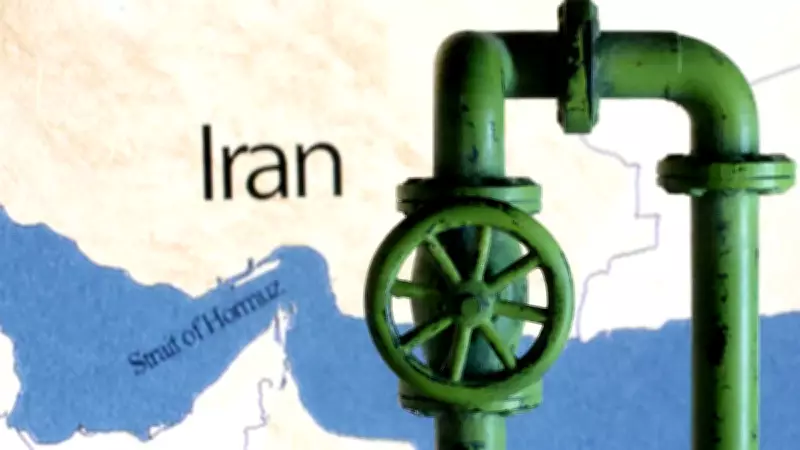
Iran's Revolutionary Guards Issue Dire Warning Over Strait of Hormuz
In a dramatic escalation of regional tensions, the commander of Iran's Revolutionary Guards stated on Monday that the strategic Strait of Hormuz has been closed. According to reports from Iranian media, the commander issued a stark warning, declaring that Iran would set any ship attempting to pass through the strait on fire. This announcement has sent shockwaves through global markets and diplomatic circles, given the critical importance of this narrow waterway for international commerce.
The Geopolitical Significance of the Strait of Hormuz
The Strait of Hormuz is a narrow maritime chokepoint located between the Persian Gulf and the Gulf of Oman. It serves as the primary transit route for a substantial portion of the world's seaborne oil shipments. Approximately one-fifth of global oil consumption passes through this strait daily, making it an indispensable artery for energy supplies to nations across Asia, Europe, and beyond. The strait's strategic value cannot be overstated, as it is flanked by Iran to the north and the United Arab Emirates and Oman to the south, placing it at the heart of Middle Eastern geopolitics.
Implications for Global Trade and Energy Security
Iran's threat to close the Strait of Hormuz poses a severe risk to global trade stability. Any disruption in this vital passage could lead to significant spikes in oil prices, potentially triggering economic repercussions worldwide. The strait is not only crucial for crude oil exports from major producers like Saudi Arabia, Iraq, and Kuwait but also for liquefied natural gas shipments from Qatar. Maritime security in the region has long been a concern, with previous incidents of tanker seizures and attacks highlighting the volatility. This latest warning from Iran's Revolutionary Guards underscores the fragile balance in the area and raises alarms about potential supply chain disruptions.

Historical Context and Regional Tensions
This is not the first time Iran has threatened to close the Strait of Hormuz. Historically, such warnings have been used as a bargaining chip in geopolitical disputes, particularly concerning sanctions and nuclear negotiations. The current statement comes amid ongoing regional conflicts and international pressures, reflecting Iran's willingness to leverage its geographical position. Analysts note that while a complete closure might be logistically challenging, even partial disruptions could have cascading effects on global energy markets and diplomatic relations.
Key Points to Consider:
- The Strait of Hormuz handles about 21 million barrels of oil per day, representing a significant share of global supply.
- Iran's control over the strait gives it substantial influence over maritime trade routes in the Middle East.
- International responses to this threat are likely to involve heightened naval patrols and diplomatic efforts to de-escalate tensions.
- The situation highlights the interconnectedness of global trade and the vulnerabilities inherent in key chokepoints.
As the world watches closely, the stability of the Strait of Hormuz remains a critical factor in maintaining smooth global trade flows. The international community is urged to monitor developments and prepare for potential contingencies to mitigate impacts on energy security and economic stability.