

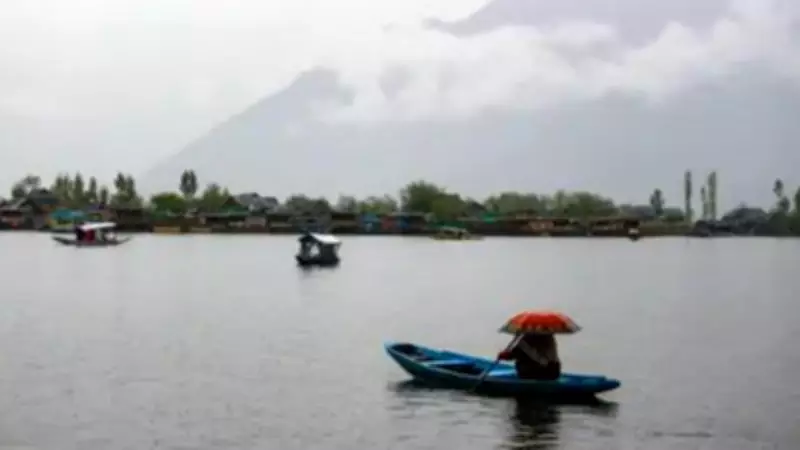
Jammu & Kashmir Loses Nearly Half Its Lakes Since 1967, Heightening Flood Dangers
A recent report from the Comptroller and Auditor General of India has unveiled a severe environmental crisis in Jammu and Kashmir, with the region losing approximately 45% of its lakes since 1967. This dramatic decline has directly contributed to increased flood vulnerability, most notably during the catastrophic 2014 Kashmir floods.
Alarming Statistics of Lake Disappearance
The CAG report, which was tabled in the Jammu and Kashmir legislative assembly last week, provides detailed figures on the loss. In 1967, Jammu had 367 lakes while Kashmir had 330, totaling 697 lakes across the region. By 2020, Jammu had lost 259 lakes, accounting for a reduction of 297 hectares in water area.
Kashmir's situation is even more concerning in terms of area lost. Although Kashmir lost 56 lakes by 2014, the area reduction was far greater at 1,537 hectares. Overall, Jammu and Kashmir has lost 315 lakes since 1967, representing nearly half of the water bodies recorded in the baseline year.

Shrinking of Remaining Lakes Compounds the Problem
Beyond the complete disappearance of lakes, the CAG report highlights another critical issue: the remaining lakes have significantly shrunk. The area of surviving lakes has decreased by an additional 1,314 hectares, meaning the total area loss from both disappearance and shrinkage amounts to 1,834 hectares since 1967.
This dual phenomenon of lake disappearance and shrinkage has created a perfect storm of environmental challenges. The report explicitly states: "The disappearance and shrinkage of lakes have degraded ecosystems, disrupted water and nutrient cycles, and heightened climate vulnerability."
Direct Link to Increased Flood Risks
State- and national-level research consistently links changing land use in lake areas to increased flood risks. Lakes naturally function as flood buffers, absorbing excess water during heavy rainfall and snowmelt. As these natural reservoirs disappear or shrink, their capacity to mitigate flooding diminishes dramatically.
The consequences became tragically apparent during the 2014 Kashmir floods, which completely submerged Srinagar. The disaster was so severe that then Chief Minister Omar Abdullah was forced to operate from Hari Niwas, a palace of Maharaja Hari Singh located at the foothills of the Zabarwan mountains.
The 2014 Floods: A Case Study in Consequences
A Ministry of Home Affairs report on the 2014 floods, released in 2023, provides crucial context about the scale of the disaster. The carrying capacity of the Jhelum River in Srinagar is approximately 35,000 cubic feet per second (cusecs). However, on September 6, 2014, the discharge surged to an unprecedented 135,000 cusecs.
This nearly fourfold increase overwhelmed the region's natural and artificial flood management systems. With hundreds of lakes having disappeared or shrunk over the preceding decades, the natural infrastructure that might have absorbed some of this excess water was no longer present in sufficient quantity or capacity.
The CAG report serves as both a documentation of environmental loss and a warning about future risks. As climate patterns become increasingly unpredictable and extreme weather events more frequent, the disappearance of Jammu and Kashmir's lakes represents not just an ecological tragedy but a growing threat to human safety and regional stability.






