

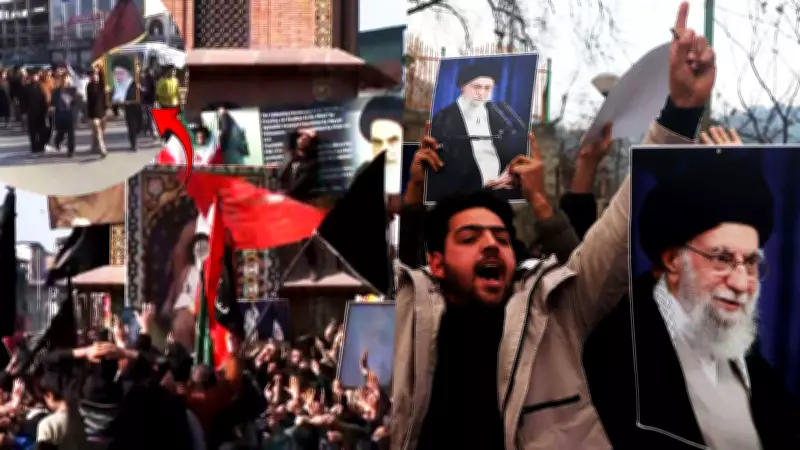
Iran's Supreme Leader Killed in Alleged US-Israeli Strikes, Sparking Protests in Kashmir
In a dramatic escalation of regional tensions, Iranian state media has reported that Supreme Leader Ayatollah Ali Khamenei was killed in a joint military strike conducted by the United States and Israel early Sunday. The news has sent shockwaves across the Middle East and beyond, with immediate repercussions felt in the Indian subcontinent.
Peaceful Demonstrations Erupt Across Kashmir Valley
Following the reports of Khamenei's death, spontaneous demonstrations were held in several areas of Jammu and Kashmir. Protesters, many hailing from Shia-majority localities, took to the streets in a peaceful display of solidarity with Iran. The gatherings were characterized by participants marching while vocally expressing their anger through anti-US and anti-Israel slogans.
One of the significant protest sites was the Saida Kadal area in Srinagar, where residents congregated to voice their collective outrage over the reported attack. The atmosphere, while charged with emotion, remained largely peaceful as community members gathered to process the news from Iran.

Official Response from Jammu and Kashmir Shia Association
The Jammu and Kashmir Shia Association issued an official statement expressing profound grief over the tragic developments. The association extended its condolences not only for the loss of Iran's Supreme Leader but also for the reported deaths of Khamenei's family members in the same strike.
In their communiqué, the association offered prayers for the departed souls, for the Iranian leadership during this transitional period, and for the people of Iran who now face uncertainty following the loss of their longstanding spiritual and political guide. The statement highlighted the deep cultural and religious connections between Shia communities in Kashmir and Iran.
Broader Implications and Regional Reactions
The reported killing of Ayatollah Khamenei represents one of the most significant geopolitical events in recent memory, potentially altering the balance of power in the Middle East. As the supreme leader of Iran since 1989, Khamenei has been a central figure in shaping the Islamic Republic's domestic and foreign policies for nearly four decades.
The demonstrations in Kashmir underscore how regional conflicts can resonate in distant communities with shared religious affiliations. The peaceful nature of the protests in Jammu and Kashmir suggests a measured response focused on symbolic solidarity rather than confrontational activism.
International observers are closely monitoring the situation as details continue to emerge about the circumstances surrounding the reported strike and its aftermath. The incident raises serious questions about escalating tensions between Iran and Western powers, with potential ramifications for global security and diplomatic relations.






