For decades, the fate of India's precious Western Ghats has been a subject of intense debate and political contention. At the heart of this environmental saga stands the dedicated work of ecologist Madhav Gadgil, whose vision for the mountain range's protection remains largely unfulfilled. The story is one of scientific recommendation meeting political resistance, leading to a complex and ongoing struggle for conservation.
The Gadgil Committee and Its Ambitious Blueprint
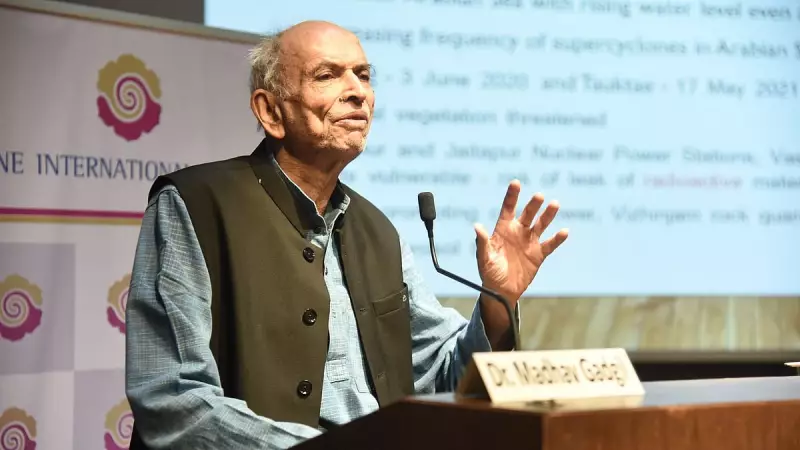
Madhav Gadgil, a renowned ecologist, chaired a high-level working group formed by the Union Environment Ministry. This panel, officially known as the Western Ghats Ecology Expert Panel (WGEEP), was tasked with a critical mission: to assess the ecological status of the Western Ghats and propose measures for its protection. The Gadgil Committee conducted an exhaustive study, engaging with local communities and examining the fragile ecosystem.
The committee's final report, submitted in 2011, presented a radical and comprehensive blueprint. It recommended classifying the entire Western Ghats region into three zones of varying ecological sensitivity, with the strictest regulations applied to the most vulnerable areas, termed Ecologically Sensitive Zones (ESZs). The report advocated for a bottom-up approach, empowering local communities in governance and imposing severe restrictions on mining, quarrying, thermal power plants, and large-scale construction projects.

Political Backlash and the Kasturirangan Committee
Despite its scientific rigor, the Gadgil Committee's recommendations faced immediate and fierce opposition. The proposals were not acceptable to any of the Chief Ministers of the six states encompassing the Western Ghats—Kerala, Karnataka, Goa, Maharashtra, Gujarat, and Tamil Nadu. State governments and powerful industrial lobbies argued that the recommendations were too restrictive and would hinder economic development and livelihood opportunities in the region.
In response to this widespread political rejection, the central government formed a second panel. This new committee was chaired by former Indian Space Research Organisation (ISRO) chairman K. Kasturirangan. The Kasturirangan Committee's mandate was to review the Gadgil report and suggest a more "pragmatic" approach. Its 2013 report significantly diluted the earlier recommendations, reducing the area earmarked as Ecologically Sensitive Area (ESA) from the entire Ghats to just about 37%, and allowing more developmental activities with safeguards.
A Vision Left in Limbo
The creation of the Kasturirangan Committee marked a pivotal moment, signaling a shift from a conservation-centric to a development-friendly framework. While the Kasturirangan report was also met with protests, particularly from farmers fearing displacement, it became the basis for subsequent government notifications. The implementation of even these diluted measures has been sporadic and inconsistent across states, leading to legal battles and continued environmental degradation from landslides, floods, and unchecked industrial activity.
Madhav Gadgil's life's work for the Western Ghats thus represents a profound clash between ecological imperative and political economy. His panel's vision, which emphasized preservation and community-led stewardship, was ultimately sidelined. The episode highlights the immense challenges of environmental governance in a federal democracy where state interests often override long-term ecological security. The Western Ghats, a UNESCO World Heritage Site and a global biodiversity hotspot, continues to wait for a conservation policy that truly honors its irreplaceable value, leaving Gadgil's comprehensive vision as an unfulfilled but critically important benchmark.