

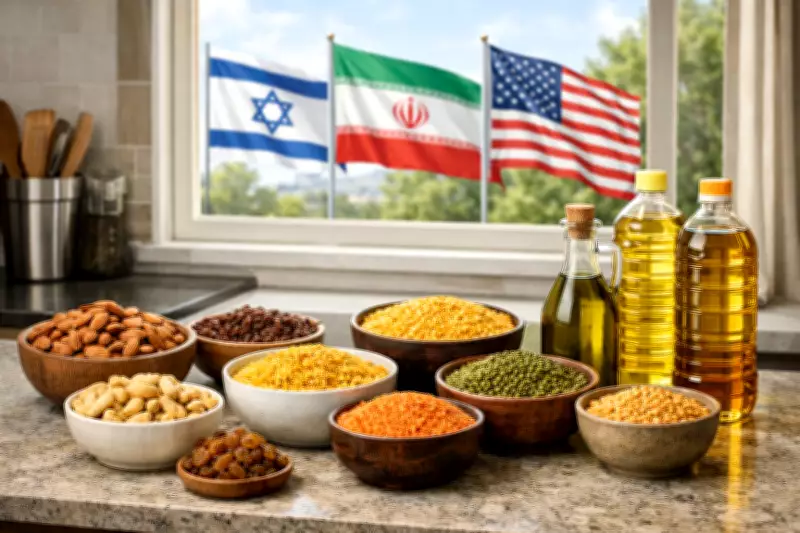
Middle East Conflict to Drive Up Prices of Kitchen Staples in India
The ongoing conflict in the Middle East, involving Israel, Iran, and the US, is creating ripple effects that are expected to significantly impact household budgets across India. Industry experts and traders warn that supply chain disruptions and rising crude oil prices could lead to price increases of up to 30% for essential kitchen items including pulses, dry fruits, cooking oil, and sweets.
Pulses and Dal to Become More Expensive
Dal, a comfort food for millions of Indians, might soon become costlier as the Middle East tensions threaten to disrupt global trade routes and push up prices of pulses. India imports approximately 5-6 million tonnes of pulses annually from countries like Myanmar, Canada, and Africa, making it vulnerable to international supply shocks.
Suresh Agarwal, president of the All India Dal Mill Association, stated: "If the war continues beyond a week, the price of pulses will increase." Higher logistics costs are expected to raise the landing price of legumes, which will eventually translate to higher retail prices, potentially worsening food inflation.

Dry Fruits and Nuts Face Sharp Price Hikes
The conflict is particularly affecting imports of dry fruits and nuts from Iran and Afghanistan. India relies on these regions for figs, almonds, pistachios, raisins, saffron, and apricots. Supply disruptions have already caused significant price increases, with some items becoming 20-30% more expensive.
Vijay Bhuta, president of the Mumbai Dryfruit and Date Merchants Association, explained: "Supplies may be entirely halted, and we will have to manage with existing stock. The closure of the Iranian route could choke off arrivals completely."
Specific examples of price increases include:
- Mamra almond: Increased from ₹1,800 to ₹2,800 per kg
- Iranian pistachio: Rose from ₹840 to ₹1,300 per kg
- Iranian apricot: Jumped from ₹750 to ₹1,400 per kg
Cooking Oil Prices Edge Higher
Cooking oil prices have already started rising, with wholesale rates increasing by up to 5% following the Middle East tensions. The connection is indirect but significant: when crude oil prices climb, more soyabean and palm oil is diverted toward biodiesel production, reducing availability for food use.
Nirav Desai, managing partner at GGN Research, noted: "The rally in cooking oil prices was linked to the rally in crude oil prices." Market participants report increased buying activity as consumers anticipate further price hikes.
Impact on Sweets and Confectionery
The price increases are affecting bulk buyers including sweetmeat makers, hotels, restaurants, bakers, and confectioners. Many are facing difficult choices as essential ingredients become more expensive.
Vicky Jaisinghani of A-1 Sweets in Ulhasnagar said: "We have to buy expensive pistachios because our mithai will not retain its taste unless we use Pishori pista." The upcoming wedding season may see further price adjustments as existing stocks deplete.
Broader Household Impact
Beyond kitchen staples, household expenses in general might rise. Crude oil and its derivatives are key components in numerous consumer goods including detergents, biscuits, toothpaste, paints, and packaging materials. Petrochemical inputs account for over 25% of input costs for FMCG companies and about 40% for paint manufacturers, meaning price increases could be widespread.
Potential Relief for Rice Consumers
There is some positive news for rice consumers. Rice prices might actually soften as exports from India to Iran and other Gulf countries face potential disruption. The Indian Rice Exporters Federation has advised members to avoid new commitments for these destinations, which could increase domestic availability.
The situation remains fluid, with traders and industry experts closely monitoring developments in the Middle East. Consumers are advised to prepare for potential price increases across multiple categories of household goods as the conflict continues to affect global supply chains and commodity markets.






