Monsoon Delay: Chandigarh Records 60% Rain Deficit
Chandigarh logged its hottest afternoon and coolest night on the same day this week, a meteorological paradox capturing the region's current weather pattern. Scorching afternoons push 39°C to 41°C, while storm-cooled evenings briefly drop temperatures by five degrees, only for heat to return the next morning. The southwest monsoon, India's seasonal equaliser, has not yet arrived.
From June 1 to June 24, Chandigarh received only 39.3 mm of rain against a long-term average of 97.1 mm, a shortfall of 60 per cent. Punjab's deficit stood at 25 per cent, and Haryana was 16 per cent below normal. Nationally, India received just 53.1 mm against a normal of 97.6 mm, a deficit of 46 per cent. Weather experts describe June 2026 as one of the driest June periods in over a century.
Why the Monsoon Has Stalled
Meteorologists identify five simultaneous suppressing factors. The most consequential is El Niño in the equatorial Pacific. According to NOAA, there is an 82 per cent chance of El Niño developing during May-July 2026, and a 96 per cent chance it continues through winter 2026-27. IMD's April forecast warned of only around 800 mm of rain against the long-period average of 870 mm, with a 35 per cent probability of a deficient season, more than double the historical norm of 16 per cent.

Western disturbances also played a role. Five affected northwest India between June 1 and June 17, active on 12 of the first 17 days. While they brought intermittent showers, their dry continental air aftermath paradoxically suppressed the monsoon's northward advance. Weak Madden-Julian Oscillation (MJO) activity, a feeble Somali Jet, and absence of Bay of Bengal low-pressure systems further stalled progress. The neutral Indian Ocean Dipole removed a potential counterweight to El Niño.
Impact on Agriculture and Groundwater
Farmers face an agricultural crisis. The delayed monsoon affects kharif crops such as paddy, maize, jowar, and fodder crops. Farmers' organisations warn that prolonged dry spells could significantly impact productivity. Each week of delay narrows the sowing window, leading to weaker yields and higher costs. Groundwater, already depleted at a rate of approximately 29 mm per year in Punjab and Haryana, faces reduced recharge exactly when demand peaks.
The broader economy feels ripple effects. When the monsoon stalls, kharif sowing for paddy, pulses, and sugarcane halts, driving down demand for seeds and fertilizers, altering consumption patterns nationwide.
What Residents Are Experiencing
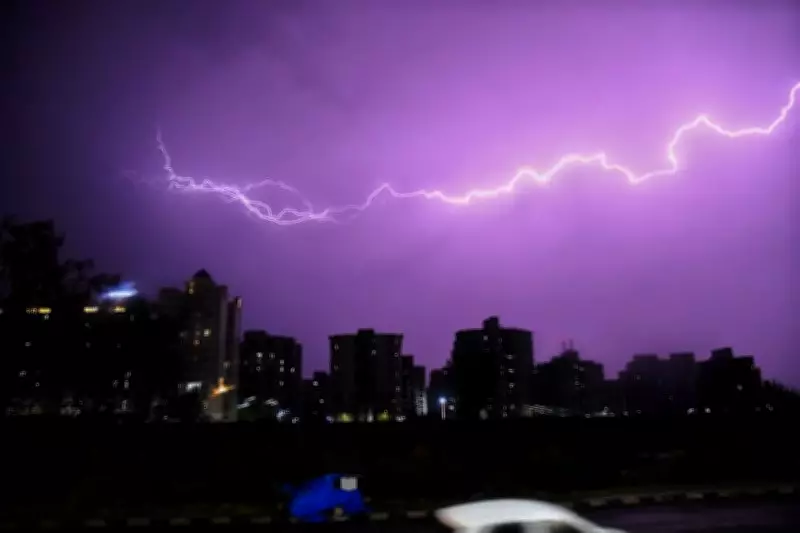
Pre-monsoon thunderstorms have swept through the Tricity but are not the monsoon. On June 21, Chandigarh received 5.1 mm of rain, the third-highest in the region behind Yamunanagar (7.5 mm) and Amritsar (6.7 mm). Maximum temperature plunged to 35°C, a fall of 4.8 degrees, while minimum dropped to 22.4°C, the coolest night in Punjab. But by June 23, the maximum was back at 39°C, rising to 39.8°C on June 24. The weekend ahead is forecast completely dry.
A senior meteorologist stated: "The thunderstorm activity being witnessed over Chandigarh, Punjab and Haryana is pre-monsoon in nature and should not be confused with monsoon onset. The southwest monsoon's advance slowed considerably during the past two weeks because of unfavourable large-scale atmospheric conditions and repeated western disturbances."
What Needs to Be Done
Water management must become urgent. State governments should activate contingency plans: accelerating canal water releases, enforcing paddy transplantation schedules, and imposing strict tubewell hour restrictions. Urban heat preparedness requires Heat Action Plans with designated cooling centres and hydration points. Agriculture needs contingency support, including short-duration crop varieties and micro-irrigation subsidies.
IMD Director General Dr Mrutyunjay Mohapatra noted: "We have been observing excess moisture being added to the monsoon rainfall since 2000 and this accumulated moisture will be causing rainfall somewhere." The challenge is that 'somewhere' is not always where it is needed.

For residents, the wait should end within days. IMD projects monsoon onset in Haryana between June 26 and July 1, and in Punjab between June 27 and July 3. The monsoon's arrival will bring sustained westerly winds, a 5-8 degree drop in maximum temperatures, and the smell of wet earth. But with a 60 per cent deficit in Chandigarh, a potentially driest June nationally, and El Niño intensifying through July and August, the season remains precarious.