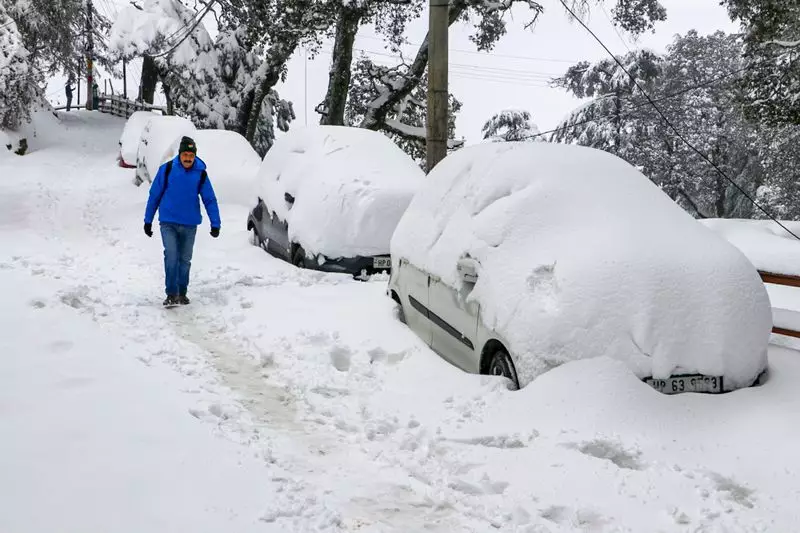
A severe cold wave has enveloped North India, bringing a sharp chill to the region in the aftermath of recent snowfall and heavy rainfall. This abrupt drop in temperatures has significantly disrupted normal life, with residents experiencing biting cold conditions that have persisted throughout the day.
Impact on Hill Stations and Major Roads
In the hilly areas, the situation is particularly dire as major roads remain blocked due to the accumulation of snow and debris from the rainfall. Transportation has come to a standstill in several parts, stranding travelers and affecting the supply of essential goods. Local authorities are working tirelessly to clear the routes, but progress has been slow due to the challenging weather conditions.
Temperature Plunge Across Northern States
The cold spell has led to a notable plunge in temperatures across states like Himachal Pradesh, Uttarakhand, and parts of Punjab and Haryana. In Delhi, the mercury has dipped sharply, with residents reporting an intense chill that has made outdoor activities uncomfortable. Weather experts attribute this sudden change to the western disturbances that brought the snowfall and rain.

Challenges Faced by Residents and Travelers
Daily life has been severely impacted, with people bundling up in multiple layers to combat the cold. Schools in some regions have been closed, and outdoor events have been postponed. Travelers planning trips to hill stations are advised to check road conditions and weather forecasts before embarking on their journeys.
Authorities' Response and Safety Measures
Local governments have issued advisories urging citizens to take precautions against the cold. Emergency services are on high alert, and shelters have been set up for those in need. It is crucial for everyone to stay informed and avoid unnecessary travel until the situation improves.
As the cold wave continues to sweep North India, residents are hoping for a respite soon. The blocked roads in the hills are a major concern, and efforts are underway to restore normalcy. This weather event serves as a reminder of the region's vulnerability to sudden climatic changes.