Skygazers Prepare for a Spectacular Show
This week, skygazers across the United States and even beyond the usual northern regions may have a rare opportunity to witness the Northern Lights, thanks to a powerful geomagnetic storm heading toward Earth. The National Oceanic and Atmospheric Administration (NOAA) has issued a Strong Geomagnetic Storm (G3) Watch for June 4 and June 5, following multiple coronal mass ejections (CMEs) from the Sun that are expected to interact with Earth's magnetic field.
The heightened solar activity has triggered alerts that the aurora borealis could become visible across as many as 23 US states, offering millions of Americans a chance to see the colorful phenomenon without traveling to Alaska or northern Canada.
What Is Happening?
Earlier this week, the Sun emitted a series of significant solar flares, including M-class and X-class eruptions, launching charged particles toward Earth. At least one of these will impact Earth's magnetic field, a key requirement for widespread aurora displays.

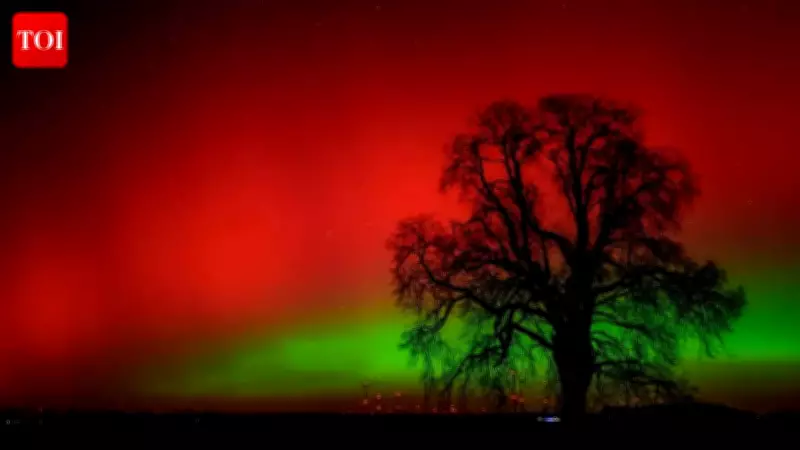
In simple terms, when solar particles collide with gases in the upper atmosphere, they release energy as shimmering colored lights. The most common color is green, but observers might also see pink, purple, red, or blue.
Typically, the Northern Lights are confined to Arctic regions. However, during a strong geomagnetic storm, the auroral oval expands southward. NOAA's Space Weather Prediction Center indicates that the approaching storm could reach G3-level conditions, significantly boosting aurora activity across much of North America.
How, When, and Where to Watch
The best viewing locations are along the US-Canada border, but depending on the storm's intensity, the lights could stretch much farther south.
- Top states to watch: Alaska, Washington, Idaho, Montana, North Dakota, South Dakota, Minnesota, Wisconsin, Michigan, Maine, Vermont, New Hampshire, and New York.
- If the storm is especially intense: Parts of Oregon, Wyoming, Nebraska, Iowa, Illinois, Pennsylvania, Massachusetts, Connecticut, Rhode Island, and even New Jersey might see the glow.
The exact visibility line will shift, so check for last-minute updates. Peak viewing times are late Thursday night into early Friday, and again Friday night. The best window is between 11 p.m. and 2 a.m. Eastern, though any time from full nightfall to sunrise is worth checking.
Tips for the Best View
To maximize your chances, head to a dark location with a clear view of the northern horizon, away from streetlights and buildings. If you cannot see the lights with your eyes, try using your phone's Night Mode camera, which may capture colors invisible to the naked eye.
However, weather can be a spoiler. Clouds, haze, or city glare can block auroras, regardless of storm strength. Additionally, June nights are short, and northern skies may not get fully dark, so time is limited.
For real-time updates, monitor NOAA's Aurora Viewline Forecast and Space Weather Prediction Center, as maps and predictions are constantly updated.
For many, this could be the best chance to see the aurora in 2026. If you are in states from Minnesota or Maine to as far south as Illinois or New Jersey, do not miss this opportunity. Clear skies and a bit of luck could allow you to witness one of nature's most spectacular light shows without leaving home.