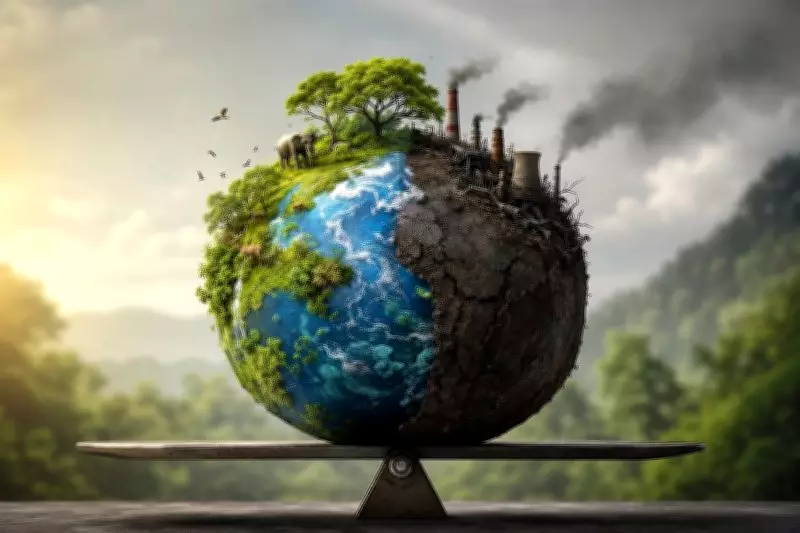
The concept of planetary boundaries, introduced by Johan Rockström and a team of scientists in 2009, defines nine critical thresholds that humanity must not exceed to maintain a stable and resilient Earth system. These boundaries include climate change, biodiversity loss, land use change, freshwater use, biogeochemical flows (nitrogen and phosphorus), ocean acidification, atmospheric aerosol loading, stratospheric ozone depletion, and chemical pollution. As the world grapples with climate change and environmental degradation, there is a growing recognition that traditional national accounting systems, such as Gross Domestic Product (GDP), fail to capture the true cost of economic activities on the planet.
The Need for Change in National Accounting
GDP, the most widely used metric for economic performance, measures the total value of goods and services produced within a country's borders. However, it does not account for the depletion of natural resources, environmental degradation, or the social costs of pollution. This oversight can lead to policies that boost short-term economic growth at the expense of long-term sustainability. For instance, deforestation contributes to GDP through timber sales and land conversion, but the loss of biodiversity and carbon sequestration services is not reflected in the accounts.
To address this gap, economists and environmental scientists are advocating for the integration of planetary boundaries into national accounting frameworks. This would involve creating metrics that measure the environmental costs of economic activities and adjusting GDP to reflect the true value of natural capital. Natural capital includes the world's stocks of natural assets, such as soil, air, water, and all living organisms, which provide essential ecosystem services.

Approaches to Integrating Planetary Boundaries
One promising approach is the development of a comprehensive wealth accounting system that includes natural capital. The World Bank has pioneered this with its Wealth Accounting and Valuation of Ecosystem Services (WAVES) partnership, which helps countries integrate natural resources into their national accounts. For example, Botswana has incorporated mineral wealth into its accounts, while Colombia has included water and forest resources. These efforts allow policymakers to see whether a country is truly becoming wealthier or merely depleting its natural assets.
Another approach is the use of environmental-economic accounts, such as the System of Environmental-Economic Accounting (SEEA), adopted by the United Nations. The SEEA provides a framework for measuring the environment and its relationship with the economy, including indicators for resource use, emissions, and ecosystem services. By linking these accounts to planetary boundaries, countries can assess their performance against global environmental targets.
Several countries have already taken steps in this direction. The United Kingdom has developed a set of natural capital accounts that track changes in ecosystems and their services. China has implemented a Green GDP index that subtracts the cost of environmental damage from traditional GDP. However, these efforts remain limited in scope and face challenges such as data availability, valuation of non-market goods, and political resistance.
Benefits of Planetary Boundary-Based Accounting
Integrating planetary boundaries into national accounting would provide several benefits. First, it would offer a more accurate picture of a country's economic health by revealing whether growth is sustainable or built on the depletion of natural resources. Second, it would help governments design policies that promote green investments and innovation, such as renewable energy and sustainable agriculture. Third, it would enable better monitoring of progress toward international commitments, such as the Paris Agreement and the United Nations Sustainable Development Goals (SDGs).
For businesses, such accounting would encourage responsible resource management and transparency. Investors are increasingly demanding information on environmental risks and impacts, and companies that align with planetary boundaries may gain a competitive advantage. Moreover, by pricing natural capital, governments can create incentives for conservation and restoration.

Challenges and the Way Forward
Despite the potential benefits, several obstacles remain. Valuing ecosystem services is complex and often controversial, as many natural assets do not have market prices. There is also a need for standardized methodologies to ensure comparability across countries. Political will is crucial, as some leaders may resist metrics that expose environmental costs or require policy changes.
To overcome these challenges, international cooperation is essential. Organizations like the World Bank, the UN, and the OECD are working to develop guidelines and provide technical assistance. Public awareness and pressure from civil society can also drive change. Ultimately, integrating planetary boundaries into national accounting is not just an economic reform but a necessity for ensuring the well-being of future generations.
In conclusion, the integration of planetary boundaries into national accounting systems represents a fundamental shift in how we measure progress. By moving beyond GDP and embracing natural capital accounting, we can create a more sustainable and resilient global economy. The time for action is now, as the window to stay within planetary boundaries is rapidly closing.