

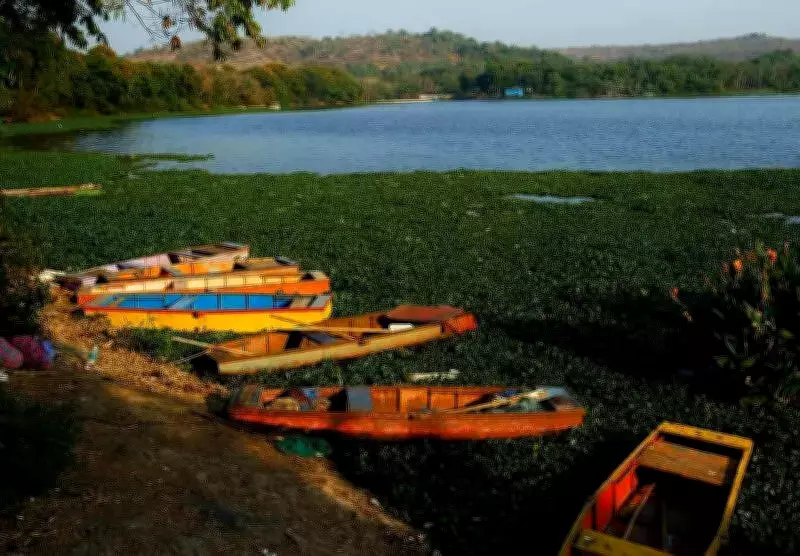
Pune Residents Accuse Municipal Corporation of Polluting Pashan Lake with Untreated Sewage
Residents and environmental activists in Pune have launched serious allegations against the Pune Municipal Corporation (PMC), accusing the civic body of allowing untreated sewage to enter the ecologically sensitive Pashan Lake. The controversy centers on what critics describe as faulty planning and grossly inadequate infrastructure, particularly focusing on a 1 million liters per day (MLD) sewage treatment plant (STP) that was commissioned just last year.
"Inadequate From Day One": Residents Condemn PMC's Sewage Plant
City-based advocate and local resident Krunnal Gharre has emerged as a vocal critic of the municipal corporation's approach. Gharre asserts that PMC pushed ahead with the 1 MLD sewage treatment plant despite knowing it was "inadequate from day one" for the rapidly growing area. "The STP's capacity was grossly underestimated. Even before it became fully operational, the STP exceeded its designed capacity during the trial run. Instead of augmenting the capacity, PMC chose a short-sighted solution in flow meters to divert excess sewage elsewhere," he alleged in a detailed statement.
According to Gharre, this diverted excess sewage is now finding its way into Pashan Lake, effectively undoing years of conservation efforts to intercept sewage inflows from Bhugaon and nearby residential areas. The advocate has taken legal action, filing an execution application against multiple authorities including PMC, Pune Metropolitan Region Development Authority (PMRDA), Maharashtra Pollution Control Board (MPCB), and the Bhugaon and Bhukum gram panchayats. His application specifically seeks the imposition of environmental costs for the alleged damage.

PMC Officials Firmly Reject Allegations
A senior PMC official has firmly rejected all allegations, stating categorically that excess sewage from the treatment plant is not being released into the lake. "The 1 MLD plant was designed to treat only a fixed quantum of sewage. Water currently entering Pashan Lake originates from upstream areas like Bhugaon, which fall outside PMC limits," the official explained, shifting responsibility to areas beyond municipal jurisdiction.
Ecological Crisis: A Lake Pushed to the Brink
Local residents paint a grim picture of the lake's current condition. Pashan resident Pushkar Kulkarni reports that the lake is effectively saturated with sewage, which explains the rampant and unchecked growth of water hyacinth. "Even if the STP operates at full capacity, it would still be far too small to make a meaningful difference. What is urgently needed is a comprehensive scientific study on sewage generation and the creation of adequate treatment infrastructure," Kulkarni emphasized, calling for systematic intervention.
The ecological damage appears extensive. City-based ecologist Shailaja Deshpande warns that the lake's entire ecosystem has been pushed to the brink by the steady inflow of both solid and liquid waste, with significant contributions from the Ramnadi stream. "The lake was once a haven for migratory birds. Today, prolonged stagnation and pollution have stripped the water of dissolved oxygen. Fish and other aquatic organisms can no longer survive in it. This is rapidly becoming a dead ecosystem," she stated with concern. Deshpande added that immediate desilting and comprehensive cleaning operations are essential if any hope remains for restoring the lake's ecological balance.
Persistent Problems and Public Outcry
Another Pashan resident, who wished to remain anonymous, highlighted the daily nuisance caused by the pollution. "Whether you pass along the Ramnadi or near Pashan Lake, it is immediately noticeable. The water body is filled with sewage, and there is a persistent, unbearable stench in the entire area," the resident added, describing the deteriorating living conditions.

The situation at Pashan Lake represents a significant environmental and civic challenge for Pune. The conflict between resident allegations and official denials underscores deeper issues of urban planning, infrastructure adequacy, and inter-jurisdictional coordination in waste management. As legal proceedings advance and public pressure mounts, the future of this important urban water body hangs in the balance, awaiting decisive action from authorities.





