

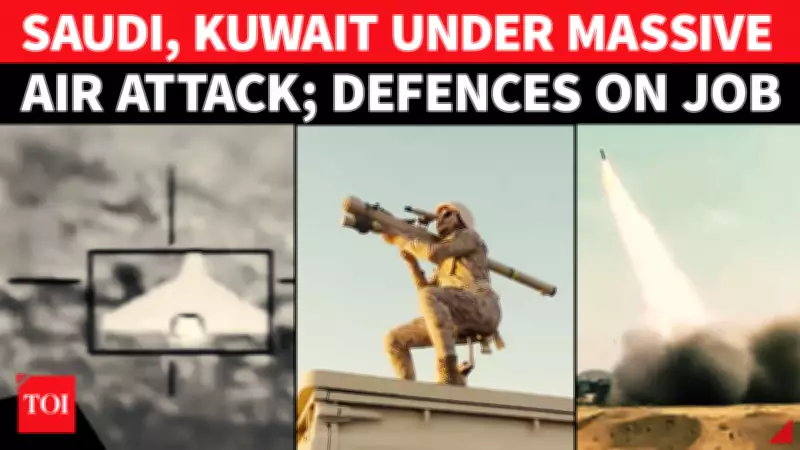
Saudi Arabia, Kuwait, and UAE Face Escalating Aerial Threats Amid Regional Conflict
Air defence systems across the Gulf region have been thrust into high alert as Saudi Arabia, Kuwait, and the United Arab Emirates confront a barrage of drone and missile attacks. This surge in aerial threats comes amidst the ongoing and intensifying war involving Iran, the United States, and Israel, with Gulf nations increasingly finding themselves in the crosshairs of regional hostilities.
Major Security Alert in Saudi Arabia After Drone Interceptions
The Saudi Ministry of Defence confirmed that its air defence forces successfully intercepted and destroyed 37 hostile drones over the kingdom's critical eastern region within a remarkably short timeframe. This incident has triggered a major security alert across the nation, highlighting the severe and immediate threat to Saudi infrastructure and stability.
Saudi Arabia has experienced a significant escalation in aerial incursions and attacks in recent days, raising profound concerns about the security of its vital economic and energy assets. The eastern region, a hub for oil production and refining, is particularly vulnerable, making these interceptions a crucial defensive success.

Iran Denies Involvement in Attacks on Saudi Oil Infrastructure
In response to the escalating situation, Alireza Enayati, Iran's ambassador to Saudi Arabia, issued a firm denial regarding Tehran's involvement in recent attacks targeting the kingdom's oil infrastructure. Specifically, he refuted claims that Iran was behind assaults on the Ras Tanura Refinery and attempted drone strikes on the Shaybah Oil Field.
Ambassador Enayati insisted that Iran's military actions are solely focused on U.S. and Israeli military interests within the context of the broader conflict. He stated that Tehran does not intend to target Gulf states directly, positioning these nations as collateral in a wider geopolitical struggle.
Kuwait Reports Drone Interceptions and Base Damage
The conflict's ripple effects have extended to Kuwait, where authorities reported intercepting multiple drones. One drone successfully evaded defences and struck the Ali Al Salem Air Base, causing damage to facilities utilized by an Italian military task force stationed there.
This attack underscores the tangible risks to international military personnel and infrastructure within the region. The involvement of foreign forces, such as the Italian task force, complicates the security landscape and raises the stakes for all parties involved.
Regional Tensions Mount as Conflict Threatens to Widen
Since the war began on February 28, more than 2,000 missile and drone attacks have been reported across the Middle East. This staggering number illustrates the scale and intensity of the ongoing hostilities, with no immediate signs of de-escalation.
Fears are mounting among regional analysts and governments that the conflict could expand into a full-blown regional confrontation, drawing in additional nations and potentially destabilizing global energy markets. The strategic importance of the Persian Gulf, particularly the Strait of Hormuz, adds a critical dimension to these security challenges.
The active engagement of air defence systems in Saudi Arabia, Kuwait, and the UAE demonstrates a coordinated defensive posture, but the persistent nature of the attacks suggests a prolonged and volatile security crisis ahead. The international community watches closely as these developments unfold, with significant implications for global diplomacy and security.






