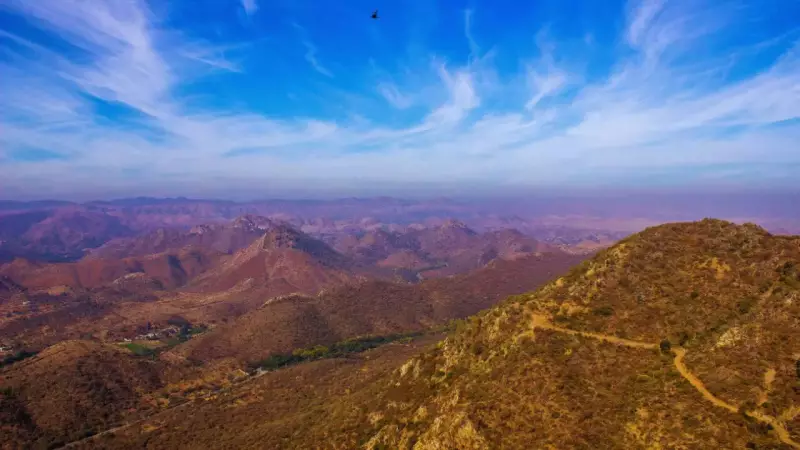
A recent decision by India's Supreme Court to adopt a new, uniform definition for the Aravalli Hills has thrust this ancient geological wonder into the national spotlight, sparking intense debate over its future protection.
The New Definition and Its Potential Impact
In late 2025, the Supreme Court accepted recommendations from a committee under the Ministry of Environment, Forests and Climate Change. The new criteria state that a hill will be recognised as an "Aravalli Hill" only if it rises at least 100 metres above the surrounding land. Furthermore, a stretch qualifies as an "Aravalli Range" only when two or more such hills lie within 500 metres of each other.
This reclassification, based on specific height and geological benchmarks, has raised significant concerns among environmentalists. Critics argue that this technical definition could exclude large stretches of lower hillocks and forested ridges from the existing legal safeguards. The fear is that these vulnerable areas may then become open to mining and real estate development.

Widespread Protests and Government Assurance
The move has triggered widespread protests and online campaigns, most notably the "Save Aravalli" movement, across Rajasthan, Haryana, and the Delhi-NCR region. Activists and citizens are alarmed by the potential ecological consequences.
The central government has countered these concerns, asserting that over 90 per cent of the Aravalli region remains protected and that there has been no relaxation of mining norms. Despite this assurance, the debate has successfully renewed focus on the indispensable ecological role of this 2-billion-year-old mountain system.
The Aravalli's Crucial Role as India's Ancient Shield
The Aravalli Range is not just the oldest mountain range in India; it is among the oldest geological formations on Earth, formed during the Proterozoic era. Predating the Himalayas and even the age of dinosaurs, it stretches across Gujarat, Rajasthan, Haryana, and Delhi.
Its importance cannot be overstated. The range acts as a critical natural barrier against the expansion of the Thar Desert into the fertile plains of North India. It supports groundwater recharge, prevents desertification, and sustains vital wildlife corridors. Its role in influencing wind patterns and rainfall distribution has shaped the region's ecology for millennia.
Ecological and Cultural Gems of the Aravallis
This ancient range hosts several key biodiversity hotspots that highlight its continued relevance:
Sariska Tiger Reserve, Rajasthan: Once devoid of tigers, this reserve within the Aravallis is now a thriving habitat for the big cats, leopards, hyenas, and diverse birdlife, thanks to successful conservation programs.
Mount Abu, Rajasthan: The highest peak of the Aravallis and Rajasthan's only hill station, offering cooler climes and the Mount Abu Wildlife Sanctuary, home to leopards and rare plants.
Jhalana Leopard Safari Park, Jaipur: A remarkable example of urban wildlife coexistence, allowing sightings of leopards within city limits.
Kumbhalgarh Wildlife Sanctuary, Rajasthan: Where history meets nature around the historic fort, sheltering leopards, wolves, and sloth bears in dense, ancient forests.
The Delhi Ridge: The northernmost tip of the Aravallis, this green lung within the megacity is crucial for Delhi's ecological balance, hosting nilgai, jackals, and numerous bird species.
Aravalli Biodiversity Parks, Gurugram & Delhi-NCR: Restored from degraded land, these parks are now hubs for migratory birds, butterflies, and small mammals.
The ongoing controversy underscores a fundamental tension between developmental definitions and holistic ecological preservation. As the debate continues, the fate of this 2-billion-year-old shield, crucial for preventing desertification and sustaining life in North India, hangs in the balance.