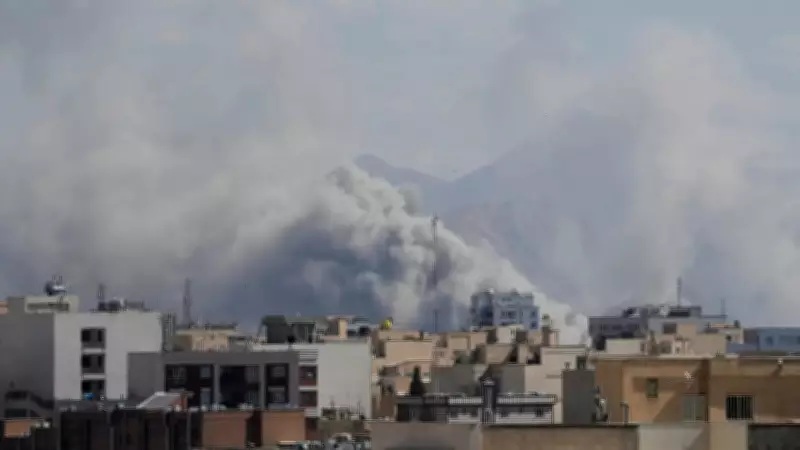
US-Iran War Enters Volatile New Phase with Extended Timeline
The conflict between the United States and Iran has escalated into a highly volatile new stage, marked by President Donald Trump indicating a significant shift in the projected duration of military operations. In an interview with NBC, Trump stated that the campaign, launched jointly with Israel, could last "around four weeks", describing it as one of the most complex offensives ever undertaken by the US military.
Iran Intensifies Retaliatory Strikes Across Region
Simultaneously, Iran has ramped up its retaliatory measures, launching missile and drone attacks across the Middle East. These strikes have resulted in civilian casualties in Israel and targeted Gulf states that host Western military forces, including explosions reported in Dubai, Doha, and Manama, with airports also coming under fire.
The United Arab Emirates has urged Iran to "go back to your senses" following these assaults on key cities in the region. The Israel Defence Forces (IDF) confirmed that Hezbollah was responsible for rocket fire launched from Lebanon, marking the first such incident since a US-brokered ceasefire between Israel and Lebanon took effect in November 2024.

European Powers Pledge Defensive Support
In a significant development, Britain, France, and Germany have collectively vowed to support "necessary and proportionate defensive action" aimed at neutralizing Iranian missile capabilities. While stopping short of joining offensive strikes, the United Kingdom has permitted the US to utilize British bases for limited defensive purposes, highlighting the rapid expansion of the war's scope.
UK Prime Minister Keir Starmer emphasized that Britain is not participating in offensive actions but has a duty to protect British lives and allies in the region. This European alignment marks a notable shift from diplomatic efforts towards active defensive coordination with Washington.

Key Developments in the Escalating Conflict
- Trump Signals Extended Campaign: President Trump acknowledged that the operation, codenamed Operation Epic Fury, may extend for weeks rather than days. He conceded there would likely be more American casualties, with the Pentagon confirming three US service members killed and five seriously wounded in the initial phase.
- IRGC Headquarters Destroyed: US Central Command reported the destruction of the Islamic Revolutionary Guard Corps (IRGC) headquarters, a critical force behind Iran's military and economic influence. Trump claimed nine Iranian naval vessels were sunk and the navy's headquarters largely destroyed, though Tehran has not verified these losses.
- Iran Retaliates Across the Region: Iranian missile and drone attacks hit Jerusalem and Beit Shemesh in Israel, killing at least 11 people. Air raid sirens sounded in northern Israel after projectiles were fired from Lebanon, raising concerns about a broader conflict front.
- Gulf States Invoke Self-Defence: Foreign ministers from the Gulf Cooperation Council condemned the attacks as "treacherous" and reserved the right to respond, warning that regional stability is vital to global economic security.
- Strait of Hormuz Tensions Spike: Iran declared the Strait of Hormuz closed, with maritime security agencies reporting attacks on vessels. Any sustained disruption threatens global oil supplies, as approximately one-fifth of the world's traded crude passes through this strategic waterway.
- Leadership Transition in Tehran: Iranian President Masoud Pezeshkian announced that a provisional leadership council has begun work, with a new supreme leader expected within days. This follows the confirmation by Iranian state media that Supreme Leader Ali Khamenei was killed in the opening waves of strikes, creating a leadership vacuum.
- Tensions in the US and Beyond: In the United States, Democratic leader Hakeem Jeffries criticized the operation as a "reckless decision". Protests erupted in Pakistan, while shipping companies suspended Suez Canal routes and airspace closures stranded thousands of travelers, with markets remaining jittery over fears of a wider Middle East conflagration.
The conflict continues to evolve rapidly, with global implications for security, economy, and diplomacy, as nations navigate the treacherous landscape of an expanding war.