Trump Signals Potential End to Iran War Despite Strait of Hormuz Closure
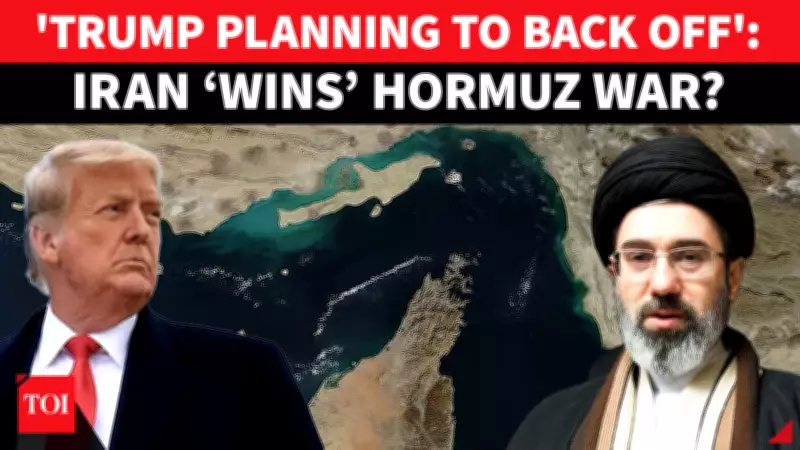
In a significant development that could reshape Middle Eastern geopolitics, US President Donald Trump is signaling a major strategic shift, indicating he is prepared to end the United States military campaign against Iran—even if the critical Strait of Hormuz remains largely closed to international shipping. According to an exclusive report by The Wall Street Journal, Trump has communicated to his aides and senior advisors that reopening the world's most vital oil chokepoint is no longer considered essential to bringing the protracted conflict to a conclusion.
Strategic Reassessment Amid Prolonged Conflict
The decision emerges as US officials and military strategists conduct a thorough assessment, concluding that any aggressive attempt to forcibly reopen the strait could potentially prolong the war beyond the administration's preferred and internally established timeline. Instead of focusing solely on securing the maritime passage, Washington appears to be pivoting its approach toward systematically weakening Iran's naval and missile capabilities before gradually winding down active hostilities and transitioning toward sustained diplomatic pressure.
This recalibration suggests a pragmatic acknowledgment of the operational challenges and risks associated with direct military confrontation in the strategically sensitive waters. If efforts to reopen the strait ultimately fail or prove too costly, the US may actively push its allies in Europe and the Gulf region to take a more prominent leadership role in managing the aftermath and ensuring regional stability.

Implications for Global Oil Markets and Diplomacy
The potential closure of the Strait of Hormuz, through which approximately one-fifth of the world's oil supply passes, has long been a flashpoint in US-Iran tensions. Trump's willingness to consider ending operations despite this closure indicates a possible de-escalation in immediate military objectives, though it raises questions about long-term energy security and international trade routes.
Analysts note that this shift could pave the way for renewed diplomatic initiatives, albeit under a framework of continued pressure on Iran's military infrastructure.Key points from the report include:
- Trump's directive to aides emphasizes ending the conflict without mandating strait reopening.
- US assessment warns that forcing the strait open might extend the war indefinitely.
- Focus is now on degrading Iran's naval and missile assets as a precondition for de-escalation.
- Contingency plans involve greater allied involvement from Europe and Gulf states.
This development comes amid ongoing regional volatility and could signal a new phase in the US approach to Iran, balancing military disengagement with strategic pressure through diplomatic channels.