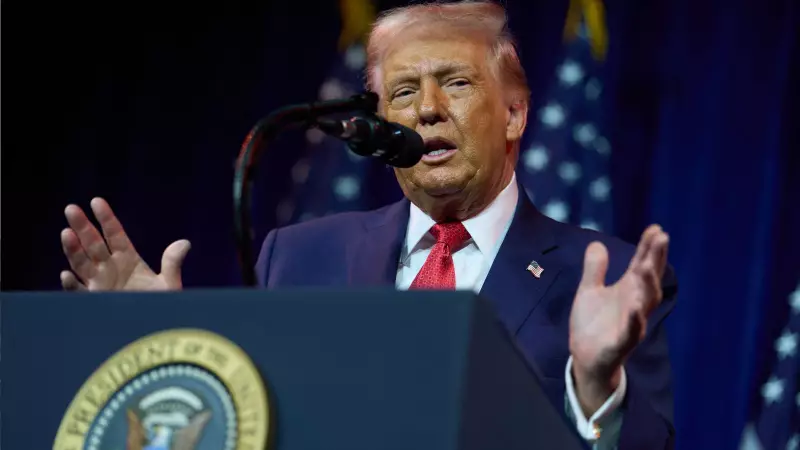
In a historic and sweeping move that marks a sharp retreat from global environmental governance, the United States under President Donald Trump has formally withdrawn from the United Nations Framework Convention on Climate Change (UNFCCC). This action, taken on Thursday, makes the US the first and only nation to exit the foundational 1992 international treaty that acknowledges climate change and sets the basic principles for global action.
A Mass Exit from Global Climate Bodies
The withdrawal from the UNFCCC is not an isolated decision. It is part of a larger disengagement from 66 international agreements and organisations that the US government declared "no longer serve American interests." This list includes a host of pivotal climate and environmental entities.
The US has pulled out of the Intergovernmental Panel on Climate Change (IPCC), the global body of scientists that produces authoritative assessment reports on climate science. It has also exited the International Renewable Energy Agency (IRENA), the International Solar Alliance (ISA)—a India-initiated body—and the International Union for Conservation of Nature (IUCN).

Other significant withdrawals include the Intergovernmental Science-Policy Platform on Biodiversity and Ecosystem Services (IPBES) and the UN Oceans framework. A White House statement said the move followed a review of all international bodies the US is part of or funds.
"These withdrawals will end American taxpayer funding and involvement in entities that advance globalist agendas over US priorities, or that address important issues inefficiently," the statement explained, framing the decision as a reallocation of resources.
Complete Disengagement from Climate Action
This mass exit signifies a complete disengagement of the United States from the architecture of international climate action. The US had already withdrawn from the 2015 Paris Agreement—an instrument of the UNFCCC—soon after Trump began his second term last year. While his predecessor Joe Biden had rejoined the Paris pact, Thursday's action is far more comprehensive, severing ties with the parent convention itself.
The UNFCCC is the constitutional framework for global climate efforts. The Kyoto Protocol and the Paris Agreement are built upon it. Leaving the UNFCCC is akin to leaving the constitution, making future participation in any derivative agreements structurally complicated.
The consequences are profound. The withdrawal from the IPCC, for instance, removes American scientists and funding from the primary process that synthesizes global climate research, potentially weakening the scientific foundation of future negotiations.
Context of a Broader Anti-Climate Agenda
This decision fits into a pattern of actions by the Trump administration that have systematically dismantled climate initiatives. Over the past year, the administration has also scaled down funding and manpower for key domestic scientific agencies engaged in climate research, such as the National Oceanic and Atmospheric Administration (NOAA) and NASA.
President Trump, a known climate denialist, has consistently undermined years of climate policy work. This latest move is seen as a significant setback to the global fight against climate change, removing the world's largest historical emitter and a major source of funding from cooperative efforts.
The international community now faces the unprecedented challenge of advancing critical climate goals without the formal participation of the United States in the very frameworks designed to foster collective action.