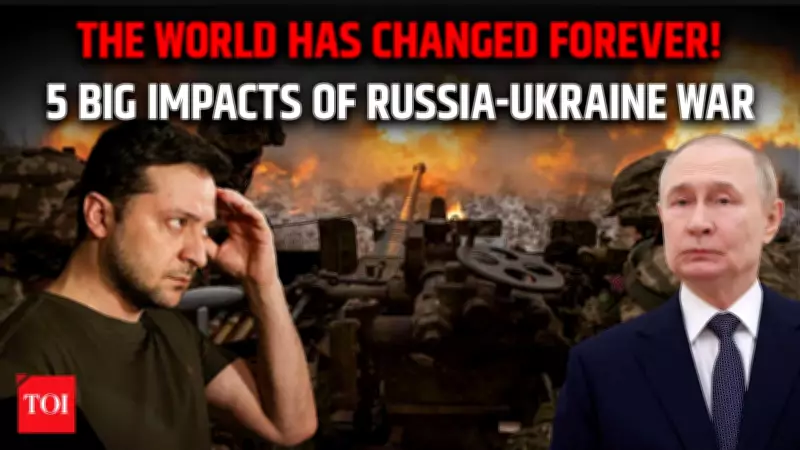
The Russia-Ukraine war has fundamentally reset global security, diplomacy, and military thinking. It spotlights five interconnected shifts that are rewriting doctrine, reshaping alliances, and altering supply chains.
Drone Revolution
Cheap, mass-produced UAVs are now capable of destroying high-value systems, forcing militaries to rethink expensive platforms. This revolution makes drones a central element of modern warfare.
NATO's Revival
NATO has gained new members and seen major European rearmament, reversing Russian strategic aims. The alliance is stronger and more unified than before the conflict.

China's Recalibrated Taiwan Approach
China now favors blockades, cyber and economic coercion over a lightning invasion, adapting its strategy based on lessons from the war.
Russia's Diminished Independence
Sanctions have driven Russia into reliance on China and pariah partners, reducing its strategic autonomy and reshaping global dependencies.
New Global Balancing Act
Countries now hedge between great powers instead of committing to rigid blocs, creating a more fluid and multipolar world order.
These are enduring changes—not temporary wartime anomalies. Cheap technology, renewed alliances, and shifting dependencies will define geopolitics and military strategy for decades to come.