Authorities in Russian-occupied Crimea have temporarily halted civilian petrol sales after a series of Ukrainian attacks intensified pressure on fuel infrastructure across the Black Sea peninsula. Sergey Aksyonov, the Kremlin-installed head of Crimea, said overnight Ukrainian strikes left four people dead and 28 injured. He did not disclose which site had been targeted.
Fuel Sales Suspended for Individuals and Private Businesses
In a later post on social media, Aksyonov announced that fuel sales would be suspended for individuals and private businesses for an unspecified period. “Fuel will be sold only to government agencies that ensure the functioning and security of the Republic of Crimea,” Aksyonov said. “I ask everyone to remain calm and to only trust official sources of information.”
Ukraine's Intensified Attacks on Fuel Infrastructure
Ukraine has stepped up attacks on fuel storage and supply facilities in Crimea in recent weeks, contributing to what has become the peninsula's most severe fuel shortage since Russia annexed the territory in 2014, a move widely condemned by the international community. Ukrainian President Volodymyr Zelenskyy said a Crimean oil depot and an oil transportation facility in Russia's Krasnodar region were among the latest targets. He described the operations as part of Ukraine's campaign of “long-range sanctions” against Russian energy infrastructure. “Russia understands only strength, and our long-range strength is certainly working for peace,” he wrote.

Strikes in Krasnodar Region
Earlier on Sunday, officials in Russia's Krasnodar region reported that a Ukrainian drone strike had ignited a fire at an oil terminal near the Black Sea village of Chushka. Authorities also said an attack on a ferry resulted in one fatality.
Worst Fuel Shortage Since 2014
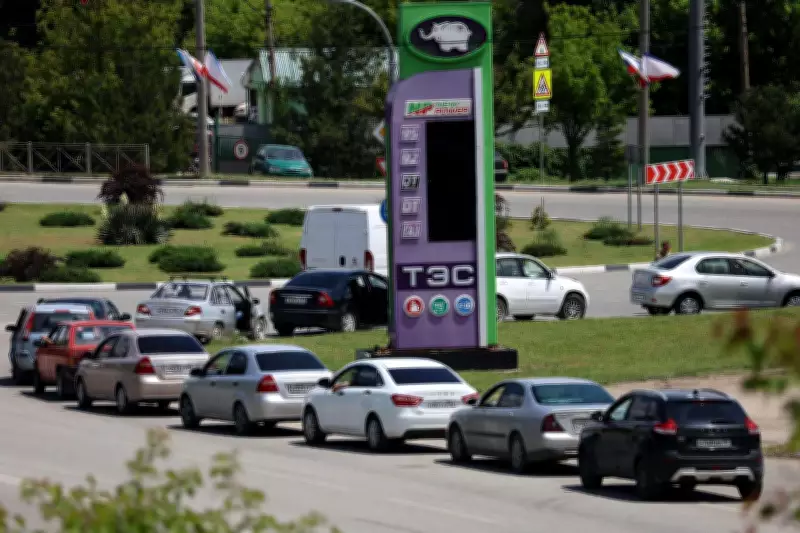
Crimea has experienced fuel disruptions before as a result of Ukrainian strikes, but the current shortages are regarded as the most serious since the peninsula came under Russian control more than a decade ago. In late May, local authorities introduced strict rationing measures, limiting motorists to 20 litres of fuel per week through a coupon system. The vouchers were quickly claimed after being released through an official messaging channel, while lengthy queues formed at filling stations across the region.
Residents and Tourists Affected
Residents have turned to social media to exchange information about fuel availability, prompting authorities to set up a dedicated hotline for tourists stranded by the shortages. Some drivers have been transporting petrol from Krasnodar and other areas via the Kerch Bridge. However, regulations restrict vehicles to carrying no more than 100 litres. Reports have also emerged of fuel being resold at twice the usual price.
Kremlin Acknowledges Crisis
In an unusual admission, the Kremlin has publicly acknowledged the scale of the fuel crisis and pledged to resolve it as quickly as possible. The attacks have underscored Kyiv's ability to strike deep into Russian-controlled territory and place pressure on Moscow's war effort at a time when Russian battlefield gains have slowed considerably. On 11 June, Russia's full-scale invasion entered its 1,569th day, exceeding the length of the First World War.