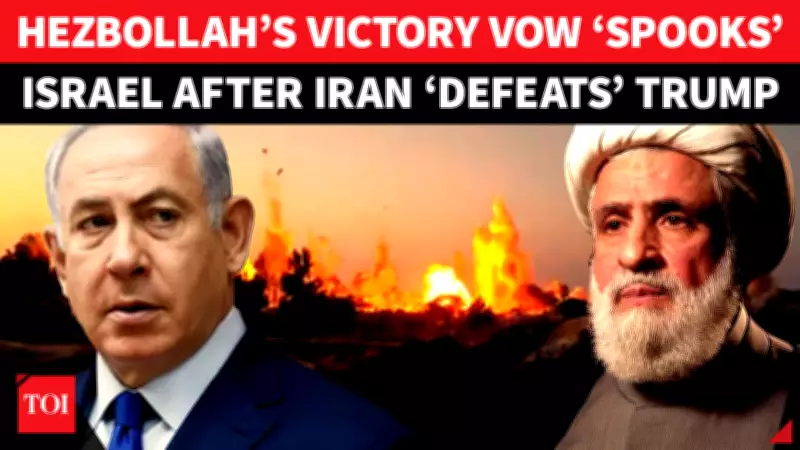
Just hours after Iran hailed its latest agreement with Washington as a major victory, Hezbollah has delivered a message that is raising alarms across the region. Secretary-General Naim Qassem praised Tehran and claimed Israel had been forced to halt attacks, framing the deal as a strategic win for Iran and its allies. He also rejected any Israeli security zones in southern Lebanon, demanding a full withdrawal and reaffirming Hezbollah's refusal to disarm. The fiery remarks signal growing tensions and fuel fears that a new and potentially dangerous chapter may be unfolding.
Hezbollah's Strong Response
In a televised address, Qassem stated that the agreement between Iran and the United States represents a significant diplomatic victory for Tehran. He argued that it demonstrates Iran's resilience and ability to negotiate from a position of strength. According to Qassem, the deal has forced Israel to reconsider its military operations, effectively halting attacks on Iranian interests. He emphasized that this outcome is a direct result of the resistance axis, led by Iran and supported by groups like Hezbollah.
Rejection of Israeli Security Zones
Qassem firmly rejected any proposal for Israeli security zones in southern Lebanon, calling them a violation of Lebanese sovereignty. He demanded a complete withdrawal of Israeli forces from disputed areas and reiterated Hezbollah's commitment to armed resistance until all occupied territories are liberated. The Hezbollah leader also dismissed international calls for disarmament, stating that the group's weapons are essential for defending Lebanon against Israeli aggression.

Regional Implications
The timing of Qassem's remarks has heightened concerns among Israeli officials and regional analysts. The Iran-US deal, details of which remain partially undisclosed, appears to have emboldened Hezbollah and other Iranian proxies. Israel has responded by reinforcing its northern border and conducting intelligence assessments. Observers warn that the situation could escalate into direct confrontation if diplomatic efforts fail to address underlying security concerns.
Broader Context
The agreement between Iran and the US, signed earlier this week, includes provisions on nuclear activities and economic sanctions relief. While Washington has described it as a step toward stability, critics argue that it empowers Iran's regional ambitions. Hezbollah's latest statements align with Tehran's narrative of victory, further complicating efforts to de-escalate tensions along the Israel-Lebanon border.
As the region braces for potential upheaval, international mediators are urging restraint from all parties. The United Nations has called for adherence to Resolution 1701, which ended the 2006 war between Israel and Hezbollah. However, with both sides hardening their positions, the prospects for peace remain uncertain.