

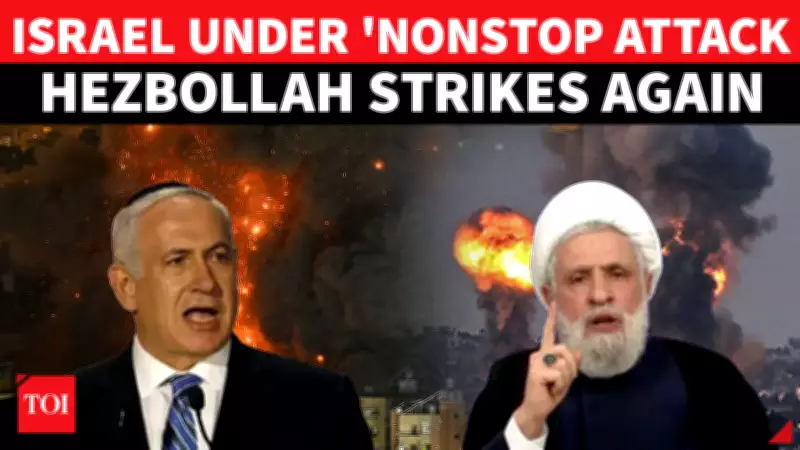
In a dramatic escalation of hostilities, Iran-backed Hezbollah has reportedly executed its third drone strike against Israel within a single day, further inflaming the volatile Israel-Lebanon border region. The Israel Defense Forces (IDF) confirmed that a drone targeted an Israeli military zone near the Lebanese frontier, prompting air raid sirens to blare across multiple communities in the Upper Galilee area. Fortunately, no casualties were reported, but the frequency of these attacks has sparked serious concerns regarding Hezbollah's advancing drone capabilities and the efficacy of Israel's aerial defense systems.
Escalating Tensions Along the Border
The latest assault occurs amidst a fragile ceasefire mediated by the United States, which has been under strain due to continued Israeli military operations in southern Lebanon. Israeli forces have carried out airstrikes and controlled demolitions in several villages, while Hezbollah has intensified its rocket and drone offensives, seemingly undeterred by ongoing diplomatic efforts aimed at preventing a wider conflict.
Netanyahu's Stance Under Scrutiny
Prime Minister Benjamin Netanyahu now faces mounting pressure, with speculation that he may disregard directives from former U.S. President Donald Trump to maintain the ceasefire. The repeated Hezbollah attacks have tested Israel's resolve and raised questions about the sustainability of the current truce. Analysts suggest that Netanyahu's government might opt for a stronger military response rather than adhering to external calls for restraint, potentially triggering a broader regional confrontation.

Hezbollah's Growing Drone Arsenal
Hezbollah's ability to launch multiple drone strikes in quick succession highlights its expanding unmanned aerial vehicle (UAV) capabilities, which pose a significant challenge to Israel's Iron Dome and other defense mechanisms. The group's use of drones for targeted attacks marks a tactical shift, allowing for precision strikes while minimizing risk to its operatives. This development has alarmed Israeli defense officials, who are now re-evaluating their strategies to counter such threats.
International Reactions and Diplomatic Efforts
The international community has reacted with concern, urging both sides to exercise restraint. The United Nations Interim Force in Lebanon (UNIFIL) has called for an immediate de-escalation, while the U.S. has reiterated its support for Israel's right to self-defense but also stressed the importance of upholding the ceasefire. Meanwhile, Iran, Hezbollah's primary backer, has remained silent on the latest attacks, though its role in supplying advanced weaponry to the group is well-documented.
What Lies Ahead?
As the situation continues to unfold, the potential for a full-scale war remains high. Israel's security cabinet is reportedly convening to discuss possible retaliatory measures, which could include targeted strikes against Hezbollah positions in Lebanon or even Iranian assets in Syria. The coming days will be critical in determining whether the ceasefire holds or if the region plunges into another devastating conflict.






