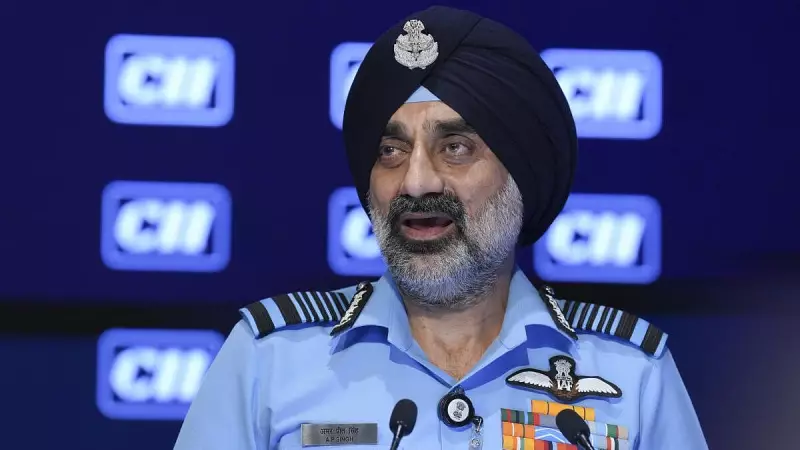
Air power played the defining role as the first line of response and a crucial deterrent during the recent Operation Sindoor, the Chief of the Indian Air Force (IAF) revealed. The senior commander emphasized that while the operation was brief, its intensity was significant and showcased a high degree of synchronization between the nation's military and political leadership.
Air Dominance in a Short, Intense Conflict
The IAF Chief provided these critical insights on January 9, 2026, offering a rare glimpse into the mechanics of a key national security operation. He described the event as a powerful demonstration of how modern aerial warfare capabilities can shape the outcome of a conflict from its very inception. The operation, though short in duration, was marked by a high level of intensity and precise execution.
This statement underscores a strategic shift where air assets are no longer seen merely as support elements but as the primary instruments of immediate national response. The ability to project power rapidly and decisively from the skies proved to be a cornerstone of the operation's reported success.

Synchronization Between Leadership and Military
A key takeaway from the IAF Chief's remarks was the seamless coordination achieved during the event. He stressed that Operation Sindoor demonstrated exceptional synchronisation between the military command and the country's political leadership. This alignment is considered vital for the success of any time-sensitive military action, ensuring that strategic objectives and tactical execution are perfectly aligned.
Such synergy allows for swift decision-making and clear chains of command, which are essential when responding to emergent threats. The operation served as a real-world test of these protocols, with the results highlighting an effective and unified national security apparatus.
Implications for India's Defense Posture
The public acknowledgment of air power's primary role sends a clear strategic message. It reinforces the IAF's evolving doctrine that prioritizes rapid mobilization, air dominance, and network-centric warfare. The experience from Operation Sindoor is likely to influence future training, procurement, and tactical planning within the force.
By successfully leveraging air power as both a responder and a deterrent, the operation has validated India's investments in its aerial capabilities. It highlights a mature and capable force ready to defend national interests with precision and overwhelming force when necessary. The lessons learned will continue to shape India's defense strategy in an increasingly complex geopolitical environment.