

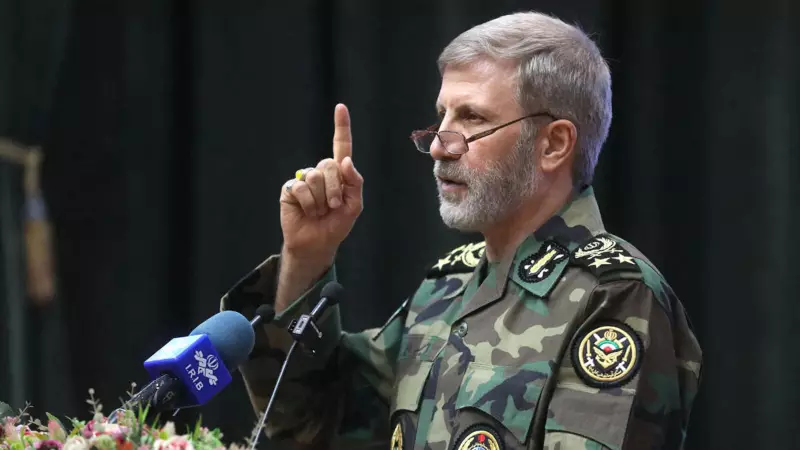
Iran's top military commander issued a stark warning on Wednesday, stating the Islamic Republic is prepared to launch a preemptive strike in response to hostile foreign rhetoric. This threat from Major General Amir Hatami comes as the nation grapples with widespread domestic protests and a severe economic downturn.
Army Chief's Stern Warning to Adversaries
Addressing students at a military academy, Major General Amir Hatami, the commander-in-chief of Iran's regular army (Artesh), declared that Iran views the intensification of aggressive rhetoric as a direct threat. "The Islamic Republic considers the intensification of such rhetoric against the Iranian nation as a threat and will not leave its continuation without a response," Hatami stated, as reported by the state-run IRNA news agency.
His comments are widely seen as a reaction to recent statements by U.S. President Donald Trump, who warned that the United States would intervene if Tehran violently suppressed peaceful protesters. Hatami, who assumed his role after Israel killed several top Iranian commanders in a June conflict, confidently asserted the military's heightened readiness. "If the enemy commits an error, it will face a more decisive response, and we will cut off the hand of any aggressor," he warned.

Economic Despair Fuels Nationwide Unrest
Simultaneously, Iran entered the 11th consecutive day of nationwide protests, driven by crippling economic hardships and anger at government policies. In a bid to quell public anger, the government initiated a new subsidy payment of 10 million Iranian rials (approximately $7) to the heads of households. This benefit, reaching over 71 million Iranians, is more than double the previous subsidy but is dwarfed by rampant inflation.
The economic situation is dire. The Iranian rial has collapsed, trading at over 1.4 million to the US dollar. Shopkeepers predict prices for basic items like cooking oil could triple following the end of a preferential exchange rate for importers. Vice President for Executive Affairs, Mohammad Jafar Ghaempanah, acknowledged the crisis, stating Iran is in a "full-fledged economic war" and called for "economic surgery" to tackle corruption.
Protests Spread with Rising Casualty Toll
The protests, which began on December 28 following a sharp currency devaluation, show no signs of abating. Social media videos indicated demonstrations had spread to new cities including Bojnourd, Kerman, Rasht, Shiraz, and Tabriz on Wednesday.
According to the U.S.-based Human Rights Activists News Agency, the unrest has turned deadly. The group reports a death toll of 36 individuals, including 30 protesters, four children, and two security force members. Protests have been recorded in over 310 locations across 28 of Iran's 31 provinces, with more than 2,100 arrests made. Analysts from the Soufan Center think tank note the protests reflect not just economic pain but "longstanding anger at government repression and regime policies that have led to Iran’s global isolation."
While Iranian leaders, including Supreme Leader Ayatollah Ali Khamenei, have responded to Trump's threats, there is no immediate public indication of military mobilization for an attack in the region. The dual challenges of external pressure and internal dissent present a significant test for the country's theocratic leadership.






