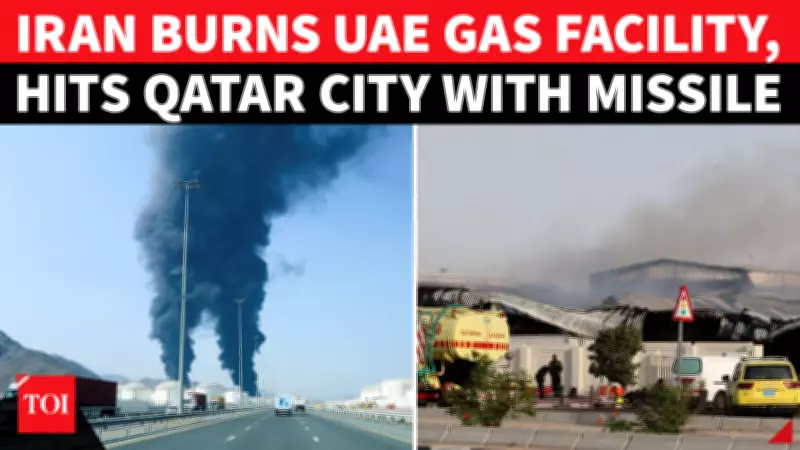
Iran Escalates Gulf Conflict with New Attacks on UAE and Qatar
In a significant escalation of regional tensions, Iran has launched fresh military attacks across Gulf nations, directly defying a two-week ceasefire that had been announced by U.S. President Donald Trump. The strikes targeted both the United Arab Emirates and Qatar, causing damage and injuries while testing international diplomatic efforts.
United Arab Emirates Under Fire: Gas Facility Targeted
The United Arab Emirates once again found itself in the crosshairs of Iranian aggression. A major blaze was reported at the strategically important Habshan gas facility in Abu Dhabi after the country's air defence systems successfully intercepted incoming missiles and drones launched by Iran. The Habshan facility is a critical component of the UAE's energy infrastructure, making this attack particularly concerning for regional stability.
Authorities confirmed that emergency response teams were immediately deployed to the site to contain the fire and assess the damage. Residents across affected areas were urgently advised to stay indoors and rely exclusively on official updates for their safety. This precautionary measure highlights the seriousness of the threat and the potential for further escalation.

Qatar Suffers Civilian Casualties from Missile Debris
Meanwhile, in neighboring Qatar, the Iranian attacks resulted in direct harm to civilians. Four people—including one child—were injured when debris from intercepted missiles struck a residential area in Doha. While Qatari officials confirmed that their air defence systems had successfully neutralized the incoming threat, the falling debris nonetheless caused significant harm to innocent bystanders.
This incident underscores the dangerous collateral damage that can occur even when defensive systems work as intended. The inclusion of a child among the injured adds a particularly tragic dimension to what authorities are calling an unprovoked act of aggression.
Defiance of International Diplomacy
The timing of these attacks is especially provocative, coming just as diplomatic efforts appeared to be making progress. The two-week ceasefire announced by U.S. President Donald Trump represented a potential opening for de-escalation and dialogue. Iran's decision to launch fresh attacks during this period represents a clear rejection of international mediation attempts and suggests a determination to pursue military objectives regardless of diplomatic initiatives.
The situation remains fluid and highly volatile, with regional powers now facing difficult decisions about how to respond to this latest provocation. The attacks on both the UAE's critical infrastructure and Qatar's civilian areas demonstrate Iran's willingness to target multiple fronts simultaneously, complicating defensive responses and increasing the risk of broader conflict.
As emergency teams work to contain the damage and treat the injured, international observers are closely monitoring whether this represents a temporary breach of the ceasefire or the beginning of a new, more intense phase of hostilities in the Gulf region. The coming hours and days will be critical in determining whether diplomatic channels can be revived or if military responses will dominate the regional landscape.