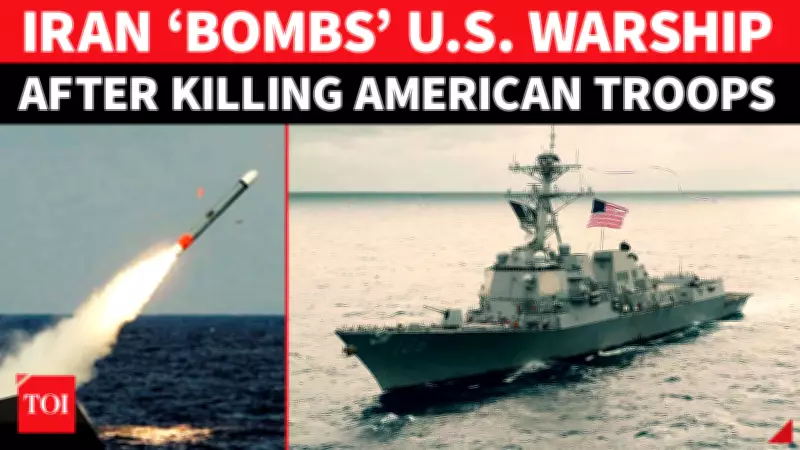
Iran Claims Missile Strike on USS Abraham Lincoln; U.S. Shares Reality Amid War Escalation
In a dramatic escalation of regional hostilities, Iran's Islamic Revolutionary Guard Corps (IRGC) has asserted that it successfully struck the USS Abraham Lincoln with ballistic missiles. However, the United States Central Command (CENTCOM) has swiftly and categorically denied this claim, providing a starkly different account of the events.
U.S. Central Command's Firm Denial
According to an official statement from CENTCOM, the Iranian ballistic missiles "didn't even come close" to hitting the aircraft carrier. The command emphasized that the USS Abraham Lincoln remains fully operational and continues to conduct launch operations in support of ongoing U.S. missions within the region. This denial underscores the conflicting narratives emerging from the incident.
Background of Soaring Tensions
The missile claim and subsequent denial occur against a backdrop of rapidly deteriorating relations and heightened military posturing. Recent U.S.–Israel coordinated strikes on Iranian targets have provoked Tehran's explicit vow of retaliation, setting the stage for potential confrontation. The situation is further inflamed by a series of aggressive actions and rhetoric from both sides.

In related developments, the IRGC has reportedly targeted U.S. Navy-linked vessels and American bases across several Gulf nations. Additional reports indicate attacks on numerous American and Israeli military sites, contributing to an atmosphere of acute crisis. The strategic Strait of Hormuz has also been a focal point, with Iran allegedly blocking the passage in retaliation, posing significant risks to global energy supplies.
Conflicting Narratives and Escalation Risks
The disparity between Iran's assertion of a successful strike and the U.S.'s firm rebuttal raises critical questions about the accuracy of battlefield reports and the potential for miscalculation. Analysts are closely monitoring whether this incident represents a deliberate provocation or a misinterpretation in the fog of war.
Key concerns include:
- The immediate risk of further military engagements between U.S., allied, and Iranian forces.
- The possibility of the conflict expanding beyond current zones, drawing in regional powers and affecting international stability.
- The impact on diplomatic efforts to de-escalate tensions, which appear increasingly fragile.
As both nations present opposing versions of reality, the international community watches with apprehension, aware that any misstep could precipitate a broader regional confrontation with global implications.