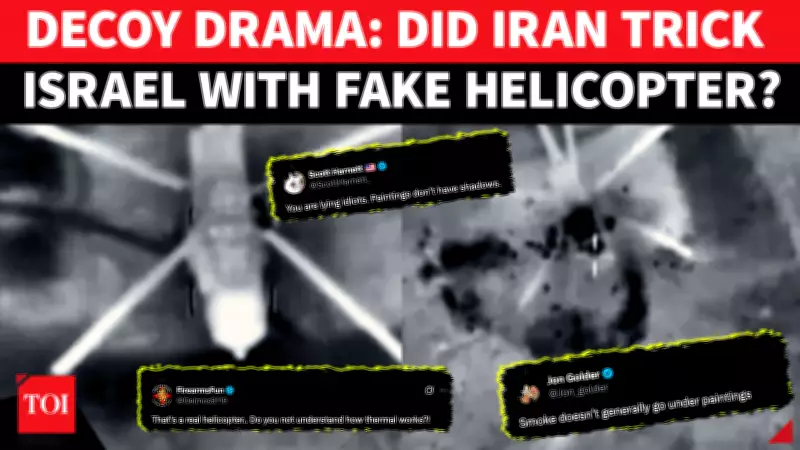
Iran Decoy Trick? Viral Footage Sparks Global Debate Over IDF Strike On 'Painted Helicopter'
A viral video released by the Israeli Defense Forces (IDF) has triggered an intense international debate, with claims emerging that Iran may have tricked Israel using a clever decoy tactic. The footage, which shows an infrared strike on what the IDF described as an Iranian Mi-17 helicopter, has analysts and social media users divided over whether the target was real or a painted imitation.
The Controversial Footage and Conflicting Theories
The Israeli military publicly shared infrared footage depicting a precision strike on an object identified as an Iranian Mi-17 helicopter. However, shortly after its release, a theory began circulating online suggesting the target might not have been an operational aircraft at all. Instead, some analysts argue it could have been a low-cost, painted decoy strategically placed on the ground by Iranian forces.
This deception tactic, if true, would represent a calculated move by Iran to mislead Israeli intelligence and military operations. Proponents of the decoy theory highlight that such a strategy would allow Iran to waste expensive Israeli precision missiles while safeguarding its actual military assets from destruction.

Analyzing the Evidence: Thermal Signatures and Military Strategy
On the other side of the debate, experts and observers point to the thermal signatures visible in the viral clip as evidence that a real aircraft was present at the time of the strike. They contend that the infrared data indicates heat patterns consistent with an active or recently operational helicopter, rather than a static, painted object.
The core of the controversy revolves around several key questions:
- Was the target a functional Iranian Mi-17 helicopter, as claimed by the IDF?
- Could it have been a sophisticated decoy designed to absorb costly missile strikes?
- What are the implications for future military engagements between Israel and Iran?
As of now, the IDF has not issued any additional statements or clarifications addressing the growing speculation and online discourse. This silence has only fueled further analysis and conjecture across global platforms.
Broader Implications for Regional Conflict and Warfare Tactics
This incident sheds light on the evolving nature of modern warfare, where psychological operations and deception play increasingly significant roles. If Iran is indeed employing painted decoys, it marks a shift toward asymmetric tactics aimed at countering technologically superior adversaries like Israel.
The viral clip has transcended military circles, becoming a topic of widespread public debate. Social media platforms are abuzz with discussions, memes, and detailed analyses from both amateur enthusiasts and professional defense commentators. The global attention underscores how digital media can amplify and complicate military disclosures in real-time.
Ultimately, the unresolved questions surrounding the IDF strike video highlight the fog of war in contemporary conflicts. Whether a clever Iranian trick or a legitimate military engagement, the episode demonstrates how perception and misinformation can shape narratives in high-stakes geopolitical standoffs.