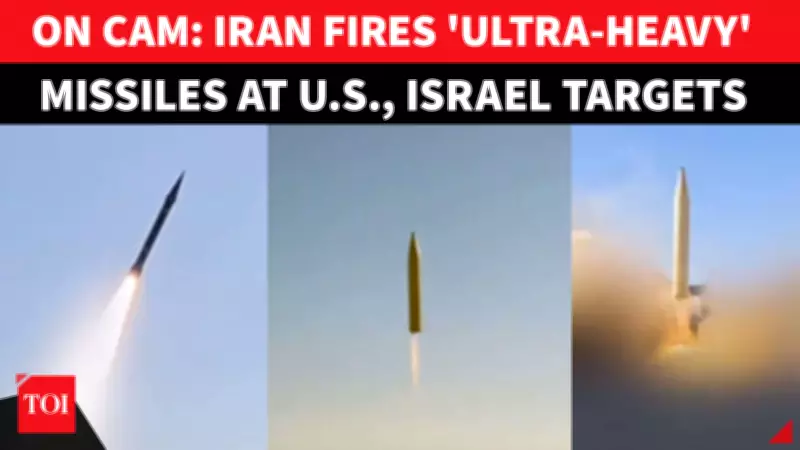
Iran Unleashes Massive Missile Barrage on Israeli and US Targets in Major Escalation
In a significant escalation of regional tensions, Iran has executed the 22nd wave of its military campaign dubbed "Operation True Promise 4," launching a formidable barrage of advanced missiles toward Israeli and United States-associated targets. The Islamic Revolutionary Guard Corps (IRGC), in coordination with reports from the Tasnim News Agency, confirmed the deployment of multiple missile types, including the Khorramshahr-4, Khaibar, and Fattah systems. This aggressive move underscores Tehran's growing assertiveness and its capacity for long-range precision strikes amid ongoing geopolitical strife.
Satellite and Video Evidence Reveals Widespread Impact
Satellite imagery and video footage have captured dramatic missile trails over key locations, providing visual confirmation of the attacks. The targeted areas include Tel Aviv, Ben Gurion International Airport, the port city of Haifa, and various military installations across the Gulf region. These strikes highlight Iran's ability to project power across vast distances, potentially threatening critical infrastructure and strategic assets of its adversaries. The visual evidence serves as a stark reminder of the escalating conflict's tangible effects on the ground.
Advanced Missile Capabilities on Full Display
Among the missiles launched, the Khorramshahr-4 stands out as an ultra-heavy weapon system reportedly equipped with a two-ton warhead and capable of achieving speeds exceeding Mach 14. This represents a significant technological advancement in Iran's arsenal, enabling devastating kinetic impact and enhanced penetration capabilities. The inclusion of the Khaibar and Fattah missiles further demonstrates Iran's diversified and sophisticated missile program, designed to overwhelm enemy defenses and deliver precise strikes against high-value targets.

Iranian Officials Issue Stern Warnings Amid Rising Tensions
Iranian military officials have emphasized that their missile bases remain fully operational and ready for continued engagements. In a clear warning to Israel and the United States, they indicated that more advanced long-range systems could be deployed if the conflict intensifies further. This statement reflects Iran's strategic posture of deterrence and its willingness to escalate military actions in response to perceived threats or provocations. The ongoing operation signals Tehran's commitment to leveraging its missile capabilities as a central tool in regional power dynamics.
Broader Context of Regional Conflict and International Implications
This missile barrage occurs against a backdrop of heightened hostilities involving various actors in the Middle East. Recent developments, such as attacks by Arab fighters in Jordan and Hezbollah's deployment of elite forces in Lebanon, illustrate the interconnected nature of the conflict. Iran's actions are likely intended to assert its influence, retaliate against perceived aggressions, and demonstrate solidarity with allied groups. The international community, particularly the United States and its partners, faces mounting challenges in managing the fallout and preventing further escalation that could destabilize the region.
The launch of Operation True Promise 4's 22nd wave marks a critical juncture in the ongoing tensions between Iran, Israel, and the United States. As missile strikes continue to target strategic locations, the risk of broader military confrontation looms large, with potential implications for global security and diplomatic relations. Monitoring Iran's next moves and the responses from affected nations will be crucial in understanding the trajectory of this volatile situation.