

Iran-Israel War Escalates Into Regional Crisis With US Strikes and Oil Price Surge
The ongoing conflict between Iran and Israel has dramatically escalated into its 19th day, entering a perilous new phase marked by direct US military involvement, surging global oil prices, and widening regional instability. Iran's supreme leader Mojtaba Khamenei has vowed fierce retaliation following Israeli strikes that killed top Iranian security officials, while US President Donald Trump has intensified rhetoric against American allies, creating a volatile international situation.
Top Iranian Officials Killed in Israeli Strikes
Iran has confirmed the deaths of several senior leaders in targeted Israeli attacks, dealing significant blows to Tehran's leadership structure. National security chief Ali Larijani and Basij commander Gholamreza Soleimani were among those killed, with President Pezeshkian offering official condolences. In a strongly worded statement, Supreme Leader Mojtaba Khamenei declared, "Criminals have to pay soon for his blood," directly referencing Larijani's killing and promising imminent revenge.
Separately, intelligence minister Esmail Khatib was reportedly assassinated, further depleting Iran's security leadership. Despite these substantial losses, Foreign Minister Abbas Araghchi sought to project resilience, asserting that Iran's political system remains fundamentally intact. "The Islamic Republic of Iran has a strong political structure with established political, economic, and social institutions," Araghchi stated, adding that "the presence or absence of a single individual does not affect this structure."

US and Israeli Strikes Target Critical Energy Infrastructure
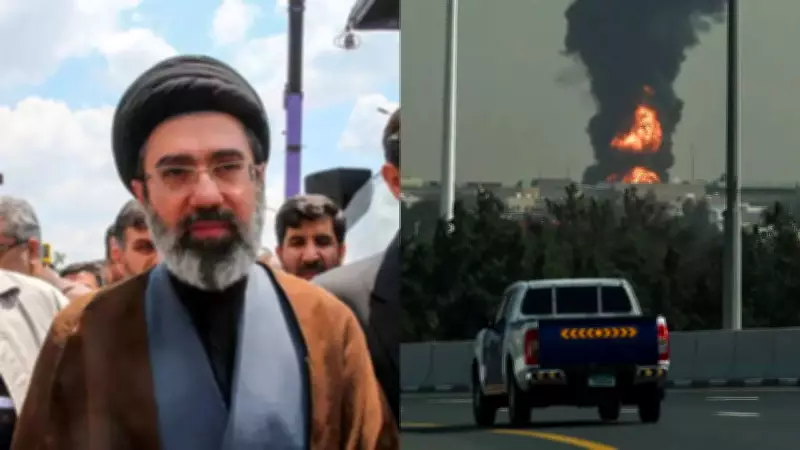
American and Israeli military operations have focused on Iran's vital energy facilities, with strikes hitting the crucial South Pars gas complex in Asaluyeh. Iranian state television confirmed the attacks, reporting that "parts of the gas facilities located in the South Pars Special Economic Energy Zone were struck by projectiles fired by the American-Zionist enemy." Although authorities later claimed the situation was under control with firefighters deployed and no casualties reported, the attacks triggered immediate global market reactions.
Brent crude oil prices surged more than 5 percent as traders reacted to the escalation, reflecting growing fears about potential disruptions to global energy supplies. The strategic Strait of Hormuz remains heavily affected, with hundreds of commercial vessels stranded and international energy flows significantly impaired. NATO allies are actively discussing strategies to reopen this critical maritime route, with NATO chief Mark Rutte emphasizing that "we all agree, of course, that strait has to open up again."
Iran Retaliates With Missile Barrages Against Israel
Iran has launched fresh missile attacks targeting central Israel, with explosions reported across Tel Aviv and surrounding areas. The barrages caused substantial damage to buildings and infrastructure, with two fatalities confirmed in Ramat Gan. Debris from intercepted missiles struck Ben Gurion Airport, severely damaging three private aircraft according to initial reports.
Israeli Defense Minister Israel Katz hinted at further military operations, stating that "significant surprises are expected throughout this day on all fronts." The conflict has expanded beyond the immediate Iran-Israel theater, with missile and drone attacks reported in Saudi Arabia, Kuwait, Qatar, and the United Arab Emirates. Air defense systems intercepted multiple threats across the region as warning sirens sounded in several countries.
US Intelligence Assessment and Political Fallout
US Director of National Intelligence Tulsi Gabbard provided a nuanced assessment of Iran's current situation during Senate testimony, stating that while Iran's government remains "intact" despite suffering major leadership losses, its military capabilities have been "largely degraded" due to sustained attacks. Gabbard suggested that if Iran survives the current conflict, it would likely attempt to rebuild its military strength, though she declined to confirm whether Iran currently poses an imminent nuclear threat.

The war has triggered significant political repercussions in Washington, with senior counterterrorism official Joe Kent resigning in protest. Kent explicitly criticized US involvement, stating that "we started this war due to pressure from Israel and its powerful American lobby." His resignation has intensified scrutiny of American participation in the escalating conflict.
Regional Expansion and International Reactions
Israel has expanded military operations into Lebanon, issuing large-scale evacuation orders in southern regions and conducting airstrikes in Beirut and the Bekaa Valley that resulted in civilian casualties. In Iraq, drones and rockets targeted the US embassy in Baghdad, with air defenses intercepting multiple threats. An armed group claimed responsibility for attacks on American targets in the region.
Russia has strongly condemned the strikes near Iran's Bushehr nuclear power plant, calling them "completely unacceptable" and "irresponsible." Germany has also criticized the conflict, with Chancellor Friedrich Merz stating that Berlin "would have advised against taking this course of action" and warning that there appears to be "no convincing plan" for achieving success.
Humanitarian and Economic Consequences
The civilian toll continues to mount dramatically, with Iran reporting at least 1,444 fatalities and over 18,500 injuries since hostilities began on February 28. Civilian areas in both Iran and Lebanon have been struck, with casualties reported across multiple regions. The conflict has disrupted global trade patterns, destabilized energy markets, and complicated diplomatic efforts throughout the Middle East.
India has taken proactive measures to secure its shipping interests, deploying additional warships to escort vessels in the Gulf region. Officials confirmed that 22 Indian-flagged ships carrying 611 seafarers remain in the area, all reported safe despite approximately 1.7 million tonnes of energy cargo being stranded due to disruptions in the Strait of Hormuz. Prime Minister Narendra Modi emphasized the critical need for "safe and free navigation through the Strait of Hormuz" during discussions with regional leaders.
As military operations intensify on multiple fronts and diplomatic tensions escalate internationally, the Iran-Israel conflict shows no signs of de-escalation. With energy infrastructure under sustained attack, civilian casualties mounting daily, and regional stability deteriorating rapidly, the crisis continues to reshape the geopolitical landscape of the Middle East with unpredictable consequences for global security and economic stability.





