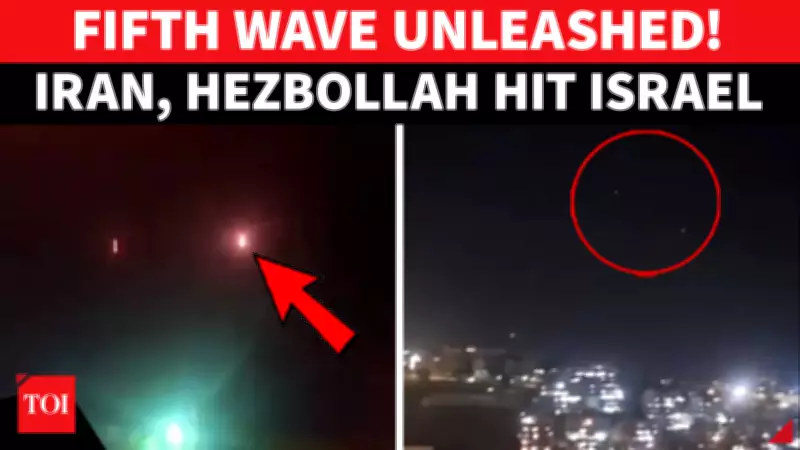
Fresh reports suggest Iran has launched what is being described as a fifth wave of ballistic missile attacks against Israel, marking a new escalation in the ongoing confrontation. Regional media and monitoring channels reported multiple missile launches toward Israeli territory, while separate reports claimed Hezbollah had joined the latest round of attacks. Explosions and air raid alerts were reported as Israeli security forces responded to the threat. Meanwhile, Israeli media reported preparations to tighten restrictions on national airspace and review possible measures involving Ben Gurion International Airport.
Escalation in the Conflict
The fifth wave of missile strikes represents a significant intensification of hostilities between Iran and Israel. According to regional sources, the missiles were launched from multiple locations within Iran, targeting strategic sites across Israel. The Israeli military confirmed that its air defense systems were actively engaged, intercepting several projectiles while others caused damage and injuries. Emergency services were deployed to affected areas as sirens wailed across central and northern Israel.
Hezbollah's Role
Hezbollah, the Lebanese militant group backed by Iran, reportedly joined the attack by launching its own salvos toward northern Israel. This marks a rare coordinated assault between Iran and its proxy, raising fears of a multi-front war. Israeli forces responded with artillery and airstrikes on Hezbollah positions in southern Lebanon. The Israel Defense Forces stated that they were prepared for any scenario and would retaliate decisively.

Impact on Civilian Life
The attacks have disrupted daily life in Israel, with schools and businesses closing in affected regions. Ben Gurion International Airport, a major hub, faced potential shutdown as authorities reviewed airspace restrictions. Flights were diverted or delayed, stranding thousands of passengers. The Israeli government urged citizens to stay near shelters and follow instructions from the Home Front Command.
International Reactions
The United Nations called for an immediate de-escalation, while the United States reaffirmed its support for Israel's right to self-defense. Regional powers, including Saudi Arabia and Egypt, expressed concern over the widening conflict. Iran defended its actions as a response to alleged Israeli strikes on its nuclear facilities earlier this year. Hezbollah's involvement has further complicated diplomatic efforts, with Lebanon facing pressure to restrain the group.
As the situation evolves, the world watches closely. The fifth wave of missile attacks could mark a turning point in the Iran-Israel shadow war, potentially drawing in other actors and reshaping the Middle East's security landscape.