US Reassesses Military Footprint After Iran Strikes
Iran's unprecedented strikes on Bahrain and Kuwait have forced the United States to urgently reassess its military posture in the Middle East, according to defense officials. The attacks, which targeted key installations in both Gulf nations, mark a significant escalation in regional tensions and directly challenge American security guarantees.
On June 29, 2026, Iran launched a coordinated barrage of missiles and drones at military bases in Bahrain and Kuwait, causing substantial damage and casualties. The strikes hit the US Naval Support Activity Bahrain, home to the Fifth Fleet, and Camp Arifjan in Kuwait, a major logistics hub. Initial reports indicate at least 12 US personnel were wounded, with several critical.
Details of the Attacks
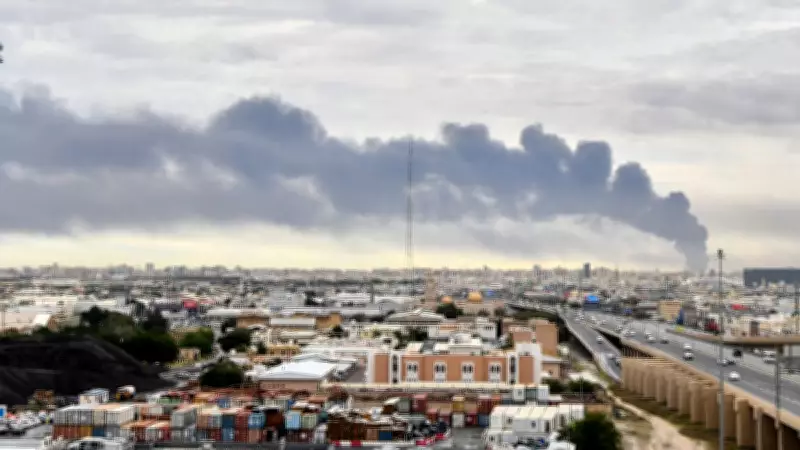
The assault began at dawn, with Iranian forces deploying over 50 ballistic missiles and 100 drones. Air defense systems intercepted many, but some penetrated, striking barracks, fuel depots, and command centers. In Bahrain, a munitions storage facility exploded, sending a plume of smoke visible for miles. In Kuwait, a hangar housing Apache helicopters was destroyed.

Iran claimed responsibility, stating the strikes were retaliation for an alleged Israeli attack on its nuclear facility in Isfahan earlier in the week. Tehran warned that any further aggression would result in "devastating consequences." The US, however, has denied involvement in the Isfahan incident.
Impact on US Strategy
Pentagon officials confirmed that the attacks have prompted a "fundamental review" of force disposition across the region. General Michael Kurilla, head of US Central Command, stated, "We are reassessing our basing, force protection, and deterrence posture to ensure we can defend our partners and interests." The review includes potential relocation of assets to less vulnerable locations, such as Qatar and the UAE, and increased reliance on long-range strike capabilities from outside the Gulf.
According to a senior defense official, the US is considering reducing its footprint in Bahrain and Kuwait, which host approximately 7,000 and 13,500 troops respectively. "We cannot afford to have our forces concentrated in areas within easy reach of Iranian missiles," the official said. The US may also accelerate deployment of THAAD and Patriot systems to protect remaining assets.
Regional Reactions
Bahrain and Kuwait condemned the strikes and called for an emergency session of the Gulf Cooperation Council. Saudi Arabia and the UAE expressed solidarity but avoided direct criticism of Iran, reflecting a cautious approach. Israel, meanwhile, offered intelligence support to the US, while Iran warned Israel against any involvement.
Analysts say the attacks expose the vulnerability of US bases in the Gulf. "This is a game-changer," said Dr. Sanam Vakil, director of the Middle East program at Chatham House. "The US can no longer assume its bases are sanctuaries. It must adapt to a new reality where Iran can strike at will."
The strikes also raise questions about the future of the US-Iran nuclear deal, which collapsed in 2025. Iran has since enriched uranium to 90% purity, according to IAEA reports, and has threatened to weaponize it if attacked.
Next Steps
US Secretary of Defense Lloyd Austin is expected to brief Congress next week on the reassessment. Options include shifting troops to Iraq and Turkey, increasing naval presence in the Arabian Sea, and bolstering cyber defenses. The US has also put its forces in the region on heightened alert, with no-fly zones imposed over parts of the Gulf.
The crisis has drawn international concern, with the UN Security Council scheduled to meet on July 1. Russia and China have called for restraint, while the EU urged de-escalation. However, with both sides entrenched, the risk of a wider war looms.