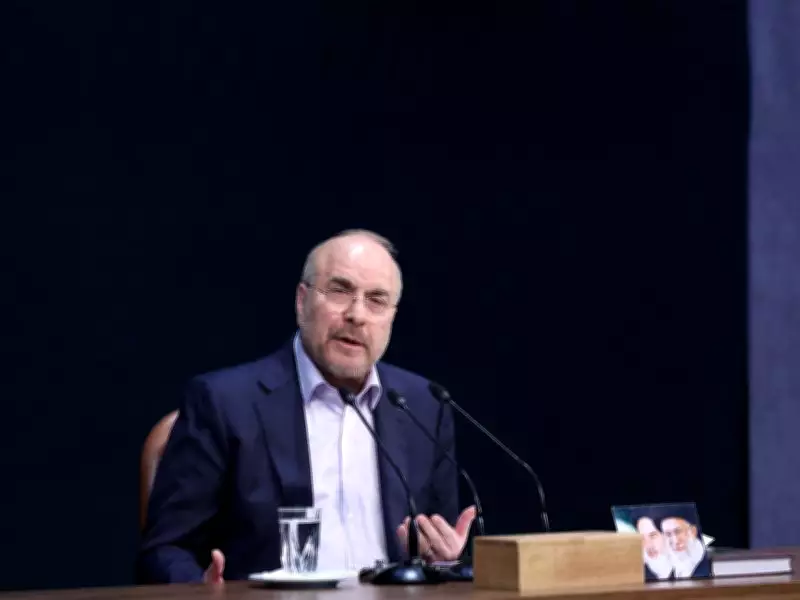
Iran's Parliament Speaker and chief negotiator Mohammad Bagher Ghalibaf issued a stern warning to the United States, stating that Tehran will respond to what it considers breaches of the understanding that ended the recent war. Speaking in a televised interview on Tuesday, Ghalibaf specifically pointed to incidents in the Persian Gulf as violations of the ceasefire. He confirmed that dialogue with Washington under the 14-point Memorandum of Understanding (MoU) is continuing.
Ghalibaf's Warning and Ceasefire Context
According to the ISNA news agency, Ghalibaf said, "We consider the events that are taking place in the Persian Gulf these nights to be a violation of the understanding to end the war, and we will definitely react to it, and naturally, the other side will react as well." This statement underscores Iran's position that any military or naval activity in the region constitutes a breach of the ceasefire agreement.
Ghalibaf clarified the current status of negotiations, emphasizing that the MoU has already produced tangible results. He noted that the first effects were seen on the evening of Sunday, June 14, or early Monday, June 15, when Pakistan's Prime Minister tweeted the end of the war, followed immediately by a post from former US President Trump announcing the lifting of the naval blockade. "The most severe type of war is a naval blockade, meaning that people and people's bread have been surrounded. This blockade was lifted, and it was one of the great successes of this memorandum," Ghalibaf said.

Implementation of the MoU and Ongoing Dialogue
Ghalibaf explained that Iran and the United States are now focused on implementing the agreement. He stated, "What is happening now on the front between the United States and us is that we signed this memorandum of understanding with the facilitating role of the mediators, namely Pakistan and Qatar. We are pursuing the dialogue to fulfill Article 13 of this Memorandum of Understanding." Article 13 stipulates that after signing the MoU and subject to the implementation of specific paragraphs, the two countries will start negotiations regarding the final deal exclusively on the other paragraphs.
Recalling the scale of the recent conflict, Ghalibaf described it as a full-scale war on land, sea, and air, encompassing internal threats and a broad resistance front from southern Lebanon to Yemen and Iraq. This context highlights the significance of the ceasefire and the MoU's role in de-escalating tensions.
Iran's Stance on Future Meetings
In a separate development, Iranian Foreign Ministry spokesperson Esmaeil Baghaei told Iranian state media IRIB that Tehran has no plans to meet with US officials in the immediate future. "Basically, we have no plans to meet with the American side at any level in the next few days," Baghaei said. He clarified that discussions scheduled in Doha are not political negotiations with Washington but rather technical-level talks linked to the implementation of previously agreed understandings, including issues related to frozen Iranian assets.
Baghaei further emphasized that Iran would continue to honor its commitments only if the other parties do the same. "We will implement our commitments as long as the other side implements its commitments," he stated, reinforcing Iran's conditional approach to the agreement.