Inside Iran's Expanding Missile and Drone Arsenal as Regional Tensions Escalate
Following recent joint U.S. and Israeli military strikes, Iran has issued clear signals of retaliation, with its response strategy heavily reliant on one of the Middle East's most extensive missile and drone arsenals. This development comes at a time of heightened regional instability, placing Tehran's military capabilities under intense international scrutiny.
A Layered Deterrence Network
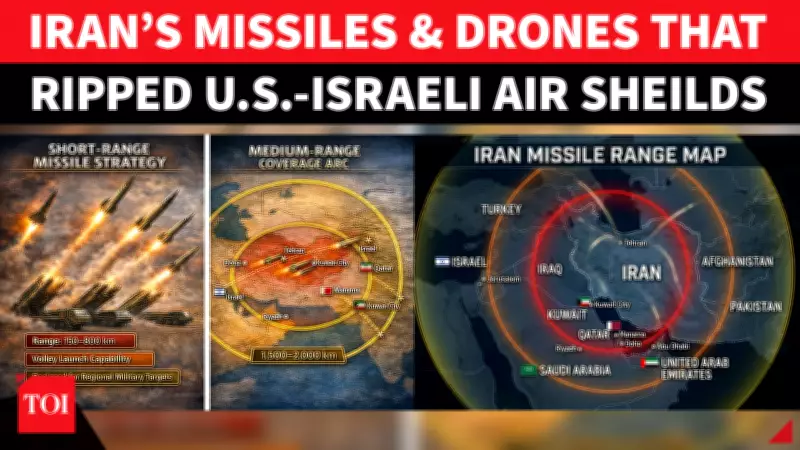
Iran has systematically built a sophisticated layered deterrence network designed to compensate for its aging air force capabilities. This network encompasses a wide range of weaponry, from short-range battlefield rockets to medium-range ballistic missiles that can effectively reach targets in Israel and neighboring Gulf states. The strategic deployment of these assets represents a calculated effort to offset conventional military disadvantages through asymmetric warfare capabilities.
Advanced Missile and Drone Capabilities
The arsenal includes advanced cruise missiles and one-way attack drones that present particularly challenging defensive problems due to their low-flying profiles and enhanced stealth characteristics. These weapons systems add a new dimension to regional security concerns, as they are notoriously difficult to detect and intercept using traditional air defense mechanisms.

Tehran has significantly invested in underground "missile cities" - hardened facilities that enhance the survivability of its missile forces during prolonged conflicts. These subterranean complexes provide protection against preemptive strikes and ensure operational continuity even under sustained military pressure, representing a key component of Iran's defensive strategy.
Regional Strategic Implications
While Iran's current missile technology cannot reach the U.S. mainland, its regional reach has fundamentally reshaped the strategic landscape of the Middle East. Key military installations, critical infrastructure, and vital shipping corridors now fall within Tehran's striking distance, creating new security challenges for regional powers and international stakeholders alike.
Strategic Impact on Regional Security ArchitectureThe expansion of Iran's missile and drone capabilities has prompted significant adjustments in regional defense postures and alliance structures. Neighboring countries have accelerated their own missile defense programs and strengthened security cooperation with global powers in response to the evolving threat environment.
Current Context and Future Trajectory
The timing of this arsenal expansion coincides with escalating regional tensions, making Iran's military capabilities a central factor in ongoing geopolitical calculations. As diplomatic efforts continue alongside military posturing, the role of Tehran's missile and drone forces in regional power dynamics remains a critical variable in Middle Eastern security equations.
Analysts emphasize that understanding the full scope of Iran's arsenal is essential for accurate threat assessment and effective policy formulation. The combination of diverse delivery systems, hardened infrastructure, and strategic positioning creates a complex security challenge that requires sophisticated responses from regional and international actors.