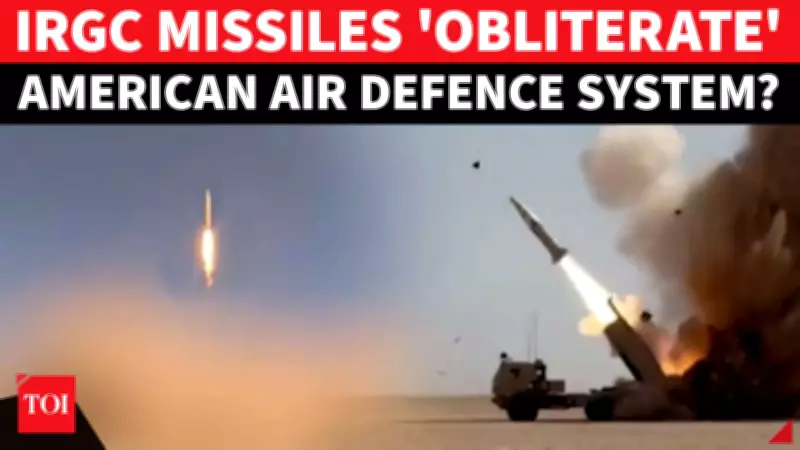
IRGC Claims Successful Strikes on US Military Assets in UAE and Indian Ocean
In a significant escalation of regional tensions, Iran's Islamic Revolutionary Guard Corps (IRGC) has publicly claimed responsibility for two major military strikes targeting United States assets. According to an announcement carried by the Tasnim news agency, the IRGC states it successfully destroyed a U.S. Terminal High Altitude Area Defense (THAAD) missile defense radar system located in Al-Ruwais, United Arab Emirates.
Naval Vessel Targeted in Indian Ocean Operation
Simultaneously, the IRGC claims to have struck a U.S. naval refueling vessel operating in the Indian Ocean. The Iranian military asserts the attack rendered the ship non-operational. Furthermore, the announcement included a stark warning, stating that Iranian missile units are actively tracking the movements of the U.S. naval fleet in the region, signaling a heightened state of alert and potential for further engagements.
Regional Fallout and Conflicting Reports
The claims have triggered immediate reactions across the Gulf. Authorities in Kuwait reported intercepting what they described as hostile aerial targets, while Bahrain confirmed one fatality caused by falling debris from a missile. These incidents suggest a broader aerial campaign with collateral effects on neighboring states.

As of now, U.S. Central Command has not officially confirmed or denied the IRGC's claims regarding the damage to the THAAD radar or the status of the naval vessel. The lack of immediate U.S. military confirmation leaves the operational success of the strikes unverified by independent sources.
Retaliation for Khamenei's Killing
Tehran has explicitly framed these operations as acts of retaliation. Iranian officials state the strikes are a direct response to the recent killing of Supreme Leader Ayatollah Ali Khamenei, promising what they term decisive and regret-inducing punishment for the perpetrators. This declaration directly links the military action to the ongoing political and security crisis stemming from Khamenei's death.
The situation underscores the volatile security landscape in the Middle East and the Indian Ocean region, where long-standing tensions between Iran and the United States appear to be entering a new, more openly confrontational phase. The international community watches closely for official U.S. military assessment and potential responses.