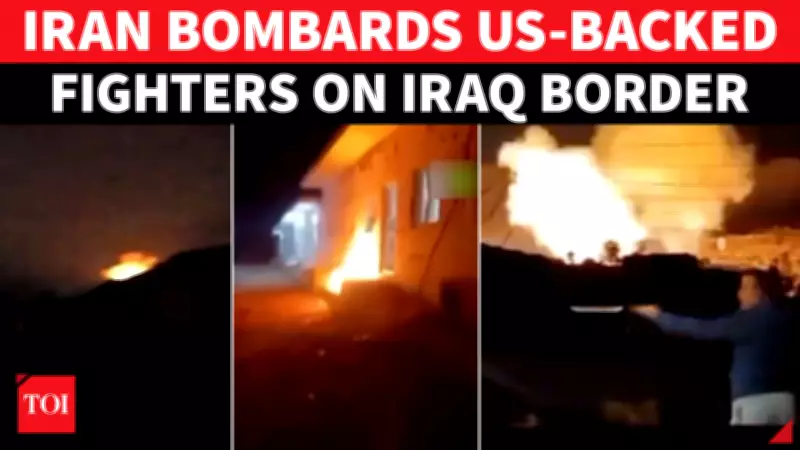
Iran's Revolutionary Guard Unleashes Massive Strikes on CIA-Backed Kurdish Militants
In a dramatic escalation of regional tensions, Iran's Islamic Revolutionary Guard Corps (IRGC) has executed a massive overnight military operation against separatist targets within Iraq's Kurdistan region. The strikes, which lit up the skies of Sulaimaniyah province with fireballs and shockwaves, specifically targeted the headquarters of the Kurdistan Toilers Association, known as Komala. This group is an Iranian Kurdish armed opposition faction that operates along the sensitive Iran-Iraq border.
Reports of CIA Coordination and Invasion Plans
The timing of these strikes is particularly significant, coming amid explosive revelations that Kurdish factions have been engaged in discussions with the United States Central Intelligence Agency (CIA) regarding potential military coordination against Iranian security forces. According to detailed reports from Reuters and CNN, these Kurdish coalitions have been actively training for possible cross-border operations designed to weaken Tehran's military grip on the region.
Sources indicate that the Trump administration has explored the possibility of arming these opposition groups to incite unrest inside Iran. This strategic consideration marks a significant shift in U.S. policy towards Iran, suggesting a more aggressive posture aimed at destabilizing the Islamic Republic from within.

High-Level U.S. Engagement with Kurdish Leaders
Adding to the geopolitical complexity, it has been reported that on March 3, U.S. President Donald Trump held a conversation with Mustafa Hijri, the president of the Democratic Party of Iranian Kurdistan (KDPI). This high-level engagement signals Washington's direct involvement with Kurdish opposition leaders and underscores the seriousness with which the U.S. is pursuing its objectives in the region.
The IRGC's decisive action appears to be a preemptive move to crush any potential invasion plans before they can materialize. By targeting Komala's headquarters, Iran aims to disrupt the operational capabilities of groups that might collaborate with foreign intelligence agencies against its interests.
Regional Implications and Security Concerns
This development raises profound questions about the future of security along the Iran-Iraq border. The involvement of the CIA in discussions with Kurdish factions suggests a broader strategy to leverage regional actors against Iran, potentially escalating conflicts in an already volatile area.
Iran's swift and forceful response demonstrates its commitment to maintaining territorial integrity and countering external threats. The IRGC's strikes serve as a clear warning to both domestic opposition groups and international actors that Tehran will not tolerate foreign-backed incursions into its territory.
As tensions continue to simmer, the international community watches closely, aware that any misstep could lead to a wider confrontation with far-reaching consequences for Middle Eastern stability.