Israel Launches Overnight Air Strikes on Key Iranian Government Buildings in Tehran
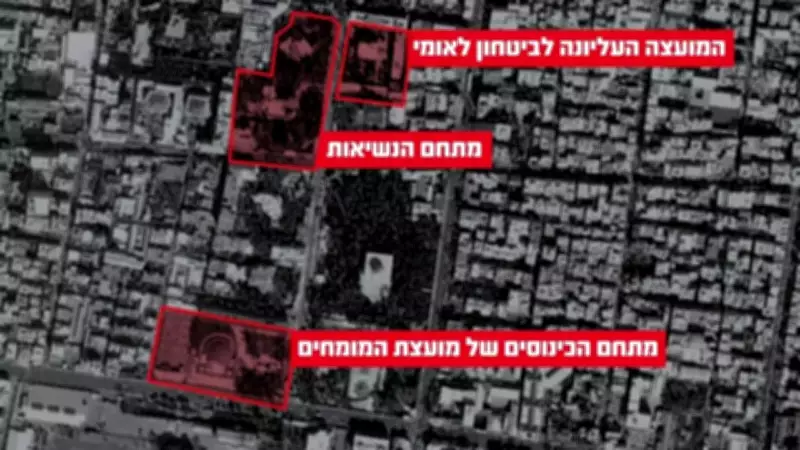
The Israeli military announced on Tuesday that it executed overnight air strikes targeting Iran's presidential office and the Supreme National Security Council building in Tehran. This aggressive move signifies a sharp and dangerous escalation in the ongoing military campaign against the Islamic Republic, intensifying regional tensions significantly.
Targeted Strikes on Leadership Compound and Communications Center
The Israeli Air Force confirmed it struck and dismantled facilities within the leadership compound of the Iranian regime located in the heart of Tehran. During this operation, numerous munitions were precisely dropped on the presidential office and the building housing the Supreme National Security Council. These strikes occurred just hours after Israel issued new waves of attacks on the Iranian capital, following explicit evacuation warnings to residents in specific parts of Tehran.
According to the Israel Defence Forces, civilians residing in the Evin neighbourhood were urgently instructed to evacuate the area ahead of planned strikes on what Israel described as critical military infrastructure. An IDF spokesperson emphasized that Israeli forces would target Iranian military installations "in the coming hours" and strongly urged civilians to leave immediately for their safety. The warning stated, "For your safety and well-being, we request that you immediately evacuate the designated area..." and cautioned that failing to evacuate "puts your lives at risk."

In addition to the government buildings, Israel reported targeting a studio complex of Iran's state broadcaster IRIB, claiming it had successfully "dismantled the Iranian terrorist regime's communications center." Iran's state-affiliated Press TV acknowledged that the broadcaster's headquarters had been targeted by US-Israeli airstrikes but maintained that there was no disruption to its television channels. The Israeli Air Force asserted that the site had been "recently used by the Iranian regime's forces to advance military activities under the guise of civilian activity and assets, in addition to the propaganda activities that emanate from the communications center."
Background of Coordinated Strikes and Regional Escalation
This latest military campaign follows coordinated US and Israeli air strikes on February 28 across multiple Iranian cities, which targeted military command centres, air defence systems, missile sites, and key regime infrastructure. Those earlier strikes resulted in the death of Iranian Supreme Leader Ayatollah Ali Khamenei and four senior military and security officials, with large explosions reported in Tehran and other major cities.
Simultaneously, Israel issued evacuation warnings in parts of southern Lebanon and Beirut's southern suburb of Haret Hreik, urging residents to leave areas near what it described as Hezbollah facilities. An IDF spokesperson advised civilians to move north of a designated line for their safety, highlighting the broadening scope of the conflict.
Iran's Retaliatory Missile Launches and Air Defence Activation
In response to the escalating situation, the Israeli military confirmed that missiles had been launched from Iran toward Israeli territory. This prompted the immediate activation of air defence systems and the issuance of air raid alerts in several regions across Israel. The Air Force identified that missiles were launched from Iran toward the State of Israel, with defence systems operating to intercept the threat.
The Home Front Command issued a preliminary directive directly to mobile phones in the relevant areas, instructing the public to exercise responsibility and act in accordance with safety directives. The post read, "One must enter protected spaces upon receiving the alert and remain in them until a new announcement. Exit from the protected space will be permitted only after receiving an explicit directive; continue to act in accordance with Home Front Command directives."

Following the February 28 strikes, Iran launched ballistic missiles and drones at US assets and regional allies, including Israel, Bahrain, Kuwait, Qatar, Saudi Arabia, the United Arab Emirates, and Jordan. This retaliatory action has widened the conflict considerably, raising serious concerns over further regional escalation and instability.