

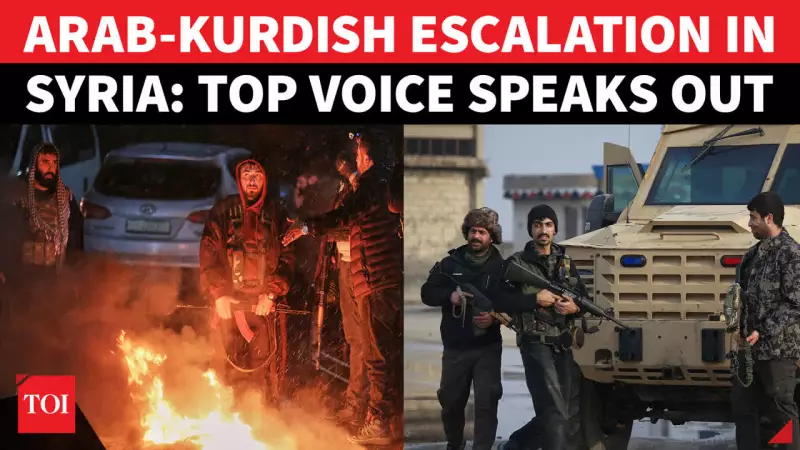
Kurdish Politician Accuses Turkey of Fueling Syria Conflict, Criticizes U.S. Inaction
Recent days have witnessed a significant escalation of hostilities in Syria, with fierce fighting erupting between forces loyal to the Syrian interim government and Kurdish troops operating in the country's northern and eastern regions. This violent outbreak marks a dramatic reversal from last year's agreement, which aimed to integrate Kurdish forces into Syria's new military and governance structures. The integration process, however, faced continuous delays and has now completely collapsed, plunging the region back into turmoil.
Breakdown of Integration Agreement Sparks Renewed Violence
The fighting represents a severe setback for peace efforts in Syria. The previously negotiated agreement between Damascus and Kurdish representatives was seen as a potential pathway toward stability, promising to incorporate Kurdish fighters into the national army and administrative frameworks. Unfortunately, the implementation of this deal encountered persistent obstacles, leading to its eventual failure. The current clashes underscore the fragility of such accords in Syria's complex political landscape.
Kurdish Leader's Perspective on the Crisis
In an exclusive interview, Kurdish-Syrian politician Foza Yusif, a prominent member of the presidential council of the Democratic Union Party, provided crucial insights into the deteriorating situation. The Democratic Union Party serves as the leading political organization among Syrian Kurds, giving Yusif's analysis particular weight. She addressed multiple critical aspects of the conflict, including the immediate circumstances on the ground, the underlying motivations behind Damascus's recent military actions, and the strategic options available to Kurdish forces moving forward.

Allegations Against Turkey and Criticism of U.S. Policy
Yusif leveled serious accusations against Turkey, claiming the neighboring nation is actively instigating the conflict between Syrian government forces and Kurdish troops. She argued that Turkey's interventions are deliberately undermining stability in the region. Simultaneously, the Kurdish politician expressed strong criticism toward the United States, condemning what she perceives as inadequate American response to the escalating violence. Her comments highlight the complex international dimensions of the Syrian conflict, where regional and global powers play influential roles.
Regional Implications and Future Prospects
The renewed fighting carries significant implications for the broader Middle East region. The conflict between Damascus and Kurdish forces not only threatens local stability but also risks drawing in external actors. As Kurdish representatives assess their limited options, the international community watches closely. The situation remains fluid, with diplomatic solutions appearing increasingly elusive as military confrontations intensify across multiple fronts in Syria.






