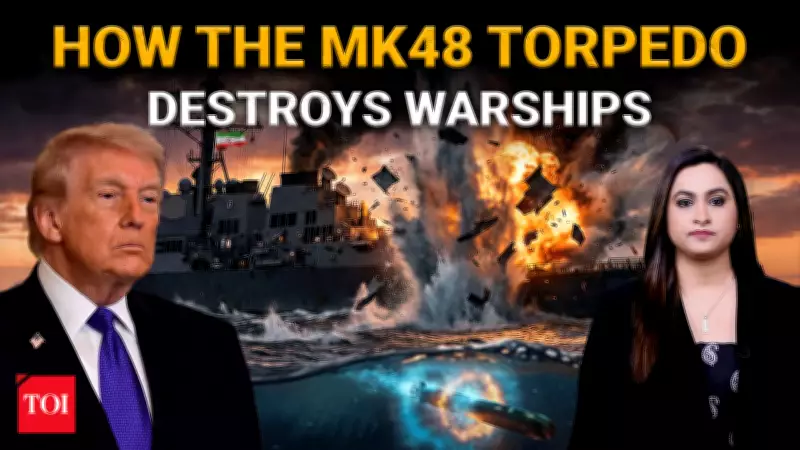
Mark-48 Torpedo Delivers 'Quiet Death' to Iranian Frigate IRIS Dena in Historic Strike
In a significant escalation of global maritime tensions, a United States submarine has executed a devastating underwater attack, sinking the Iranian frigate IRIS Dena in the Indian Ocean. The strike was carried out using the advanced Mark-48 torpedo, a weapon system renowned for its lethal precision and stealth capabilities.
Unprecedented Naval Engagement
This event marks a historic milestone in modern naval warfare, as it represents the first time since World War II that an American torpedo has successfully sunk an enemy warship. The conflict between the US and Iran, which has been expanding across international waters, reached a new intensity with this targeted operation.
US Defense Secretary Pete Hegseth provided a chilling description of the incident, referring to it as a "quiet death" for the Iranian vessel. This terminology underscores the stealthy and efficient nature of the Mark-48 torpedo, which is designed to operate with minimal detection, allowing for surprise attacks in contested maritime environments.

Technical Prowess of the Mark-48 Torpedo
The Mark-48 torpedo is a heavyweight, wire-guided weapon that has been a cornerstone of the US Navy's undersea warfare capabilities for decades. Key features include:
- Advanced Guidance Systems: Utilizes sophisticated sonar and targeting technology to track and engage enemy vessels with high accuracy.
- Stealth Operations: Engineered to operate quietly, reducing the risk of detection and enabling covert strikes.
- High Explosive Payload: Carries a substantial warhead capable of inflicting catastrophic damage to large naval ships.
- Long-Range Capability: Can be deployed from submarines at significant distances, allowing for strategic flexibility in engagement.
This deployment in the Indian Ocean highlights the weapon's effectiveness in real-world combat scenarios, particularly against modern frigates like the IRIS Dena, which was part of Iran's naval fleet.
Broader Implications for Global Security
The sinking of the IRIS Dena is not an isolated incident but part of a widening conflict between the United States and Iran. As tensions spill over into global waters, this attack signals a potential shift towards more direct naval confrontations. The use of such advanced weaponry raises concerns about the escalation of hostilities and the impact on international maritime security.
Experts warn that this event could prompt retaliatory measures from Iran, further destabilizing regions like the Middle East and Indian Ocean. The strategic implications are profound, as it demonstrates the US military's willingness to employ cutting-edge technology in active engagements, setting a precedent for future conflicts.
In summary, the Mark-48 torpedo's role in sinking the IRIS Dena underscores the evolving nature of naval warfare, where stealth and precision are paramount. As the US-Iran conflict continues to unfold, this strike serves as a stark reminder of the deadly capabilities at play in today's geopolitical landscape.