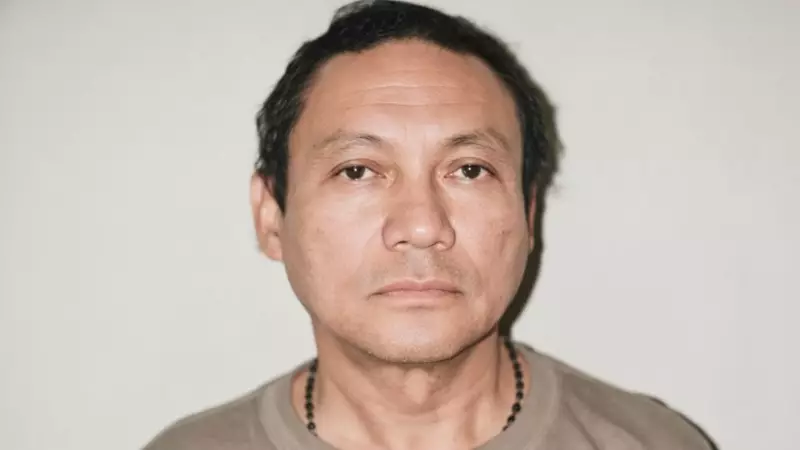
The United States has once again deployed a familiar weapon in its foreign policy arsenal: crippling economic sanctions aimed at unseating a foreign leader. The target today is Venezuela's Nicolas Maduro. But to understand the potential trajectory and pitfalls of this strategy, one must look back over three decades to another Latin American nation and its strongman: Manuel Noriega of Panama.
The Panamanian Precedent: Noriega's Rise and Fall
Long before the Chavez-Maduro socialist project took root in Venezuela, Panama's Manuel Noriega was a key US ally in a volatile region. A former intelligence chief, Noriega was nurtured by the CIA during the Cold War, valued for his anti-communist stance and assistance in covert operations against leftist movements in Central America. This relationship was lucrative for Noriega, who amassed significant wealth and power.
However, the alliance began to crumble in the late 1980s. Noriega's regime became increasingly brutal, and his involvement in international drug trafficking drew intense scrutiny from US federal agencies. The final straw came when he nullified a presidential election in 1989 that his handpicked candidate lost. In response, the administration of President George H.W. Bush imposed devastating economic sanctions on Panama in an attempt to force him out.

The sanctions froze Panamanian assets in the US and prohibited all payments to Noriega's government. The goal was clear: to strangle the Panamanian economy so thoroughly that the population and military would turn against their leader. While the sanctions caused immense hardship for ordinary Panamanians, Noriega himself remained entrenched, fortified by his control over the security apparatus and illicit revenue streams.
Sanctions to Invasion: The US Escalation
The failure of sanctions to achieve their primary objective led to a dramatic escalation. On December 20, 1989, the United States launched Operation Just Cause, a full-scale military invasion of Panama. The operation, involving over 27,000 US troops, succeeded in its immediate goal. Noriega was captured, brought to the United States, tried on drug trafficking charges, and sentenced to 40 years in prison.
Yet, the legacy of this intervention is complex. While it removed a dictator, the invasion resulted in significant Panamanian civilian casualties and left a lasting stain on US-Latin American relations. It demonstrated a clear pattern: when sanctions fail to trigger internal collapse, the US has historically been willing to consider direct military action to achieve regime change.
Venezuela: A New Chapter in an Old Playbook
Today, the US faces a strikingly similar dilemma in Venezuela. The sanctions strategy against the government of Nicolas Maduro is arguably more comprehensive than those used against Noriega. The US has imposed an oil embargo, frozen state assets, and targeted dozens of government officials with individual sanctions. The objective remains consistent: to apply such severe economic pressure that the Venezuelan military or the public ousts Maduro.
However, the parallels also reveal the strategy's inherent limitations. Like Noriega, Maduro has retained the loyalty of key military leaders by offering them control of lucrative economic sectors. The humanitarian cost has been catastrophic, with millions suffering from shortages of food and medicine, leading to a massive refugee crisis. Yet, the regime has adapted, finding alternative allies in Russia, China, Iran, and Turkey to bypass the financial blockade.
The critical question now is whether the US will follow the same path from sanctions to more direct intervention. The geopolitical context is vastly different, and the risks of a military confrontation in Venezuela are exponentially higher, potentially drawing in other global powers. The Noriega case serves as a cautionary tale that economic punishment alone often fails to dislodge a determined authoritarian regime with a loyal coercive apparatus.

The historical comparison underscores a persistent challenge in US foreign policy. Sanctions are a powerful tool of economic coercion, but their success is not guaranteed. They can inflict widespread humanitarian suffering without achieving their political goal, ultimately forcing a binary choice: accept failure or escalate to military conflict. As the world watches the Venezuelan crisis unfold, the ghost of Manuel Noriega's Panama serves as a potent reminder of the unpredictable and often tragic consequences of this approach to regime change.