

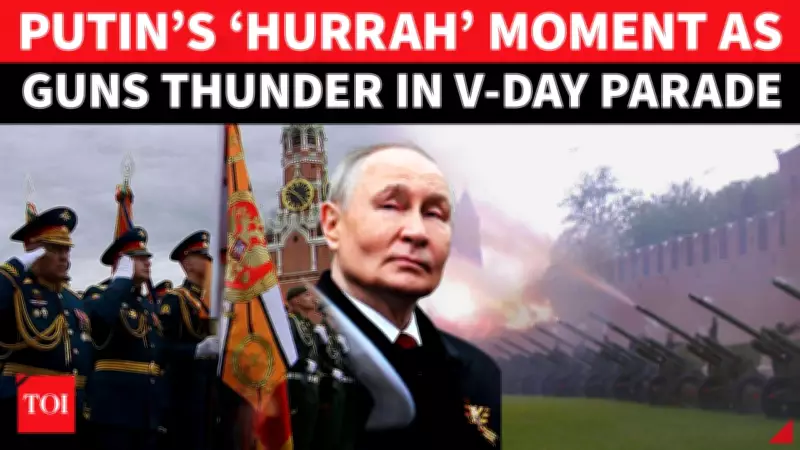
Russian President Vladimir Putin opened the Victory Day parade on May 9, 2026, with the resounding 'Hurrah' victory chant. Cannons fired across Red Square while military bands performed the national anthem during one of Russia's most symbolic national events. The Kremlin confirmed this year's parade was scaled down due to what it called a 'terrorist threat' from Ukraine. Russian officials warned of a massive retaliatory strike on Kyiv if celebrations were disrupted.
Parade Details and Context
The Victory Day parade commemorates the Soviet Union's victory over Nazi Germany in World War II. This year's event featured fewer troops and military hardware than in previous years, reflecting heightened security concerns. The Kremlin's decision to scale down the parade underscores ongoing tensions with Ukraine, which have escalated in recent months.
Official Statements
Russian officials emphasized that the reduced scale was a precautionary measure. 'We will not allow any provocations to overshadow this sacred day,' a Kremlin spokesperson stated. The warning of a retaliatory strike on Kyiv was described as a direct message to Ukrainian leadership.

International Reactions
The parade drew mixed reactions globally. Western nations condemned the display of military strength amid the conflict, while Russia's allies praised the show of national unity. Analysts suggest the event was intended to bolster domestic morale and send a clear signal to Ukraine and its supporters.
Historical Significance
Victory Day holds deep emotional resonance in Russia, with many families remembering relatives who fought in the Great Patriotic War. This year's parade, despite its reduced scale, was seen as a reaffirmation of Russia's resilience and military readiness.
As the cannons roared and the crowds chanted, the message from Moscow was unmistakable: Russia remains steadfast in its confrontation with Ukraine, ready to defend its interests by any means necessary.






