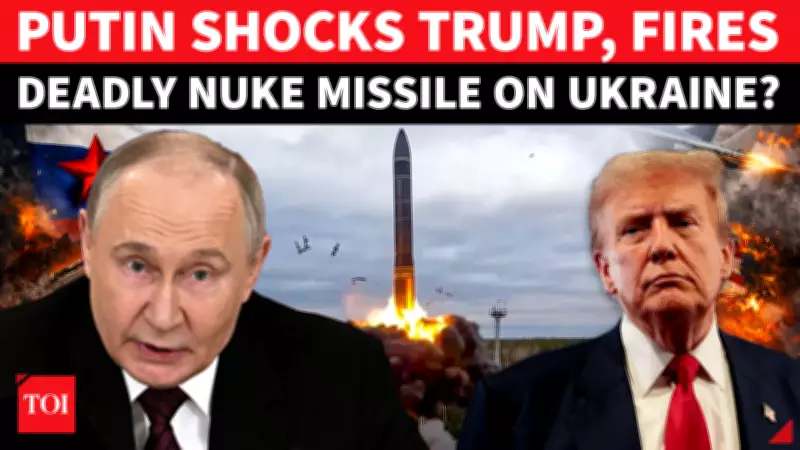
Russia Deploys Controversial 9M729 Cruise Missile in Ukraine Attacks
Ukrainian law enforcement officials have released compelling evidence confirming that Russia has utilized the highly controversial 9M729 cruise missile in its ongoing military operations against Ukraine. This development marks what appears to be the first documented combat deployment of this advanced weapon system, which has been at the center of significant international arms-control disputes.
Missile Fragments Provide Concrete Evidence
Investigators from Ukraine have recovered multiple missile fragments across various regions of the country, including western territories. These fragments bear clear markings of "9M729," providing tangible proof of the weapon's use. According to Ukrainian authorities, one particularly devastating strike involving this missile system resulted in civilian casualties near the city of Lviv, highlighting the severe humanitarian impact of these attacks.
Ukrainian officials assert that the 9M729 missile has been employed repeatedly throughout the conflict, suggesting a strategic shift in Russia's military tactics. The recovery of these fragments across multiple locations indicates widespread deployment rather than isolated incidents.

Historical Context: The INF Treaty Collapse
The 9M729 cruise missile holds significant historical importance in international arms control. Its development and testing by Russia directly contributed to the collapse of the Intermediate-Range Nuclear Forces (INF) Treaty, a landmark Cold War-era agreement between the United States and Russia that prohibited ground-launched ballistic and cruise missiles with ranges between 500 and 5,500 kilometers.
The United States formally accused Moscow of violating the INF Treaty by developing and testing the 9M729 system, allegations that Russia consistently denied. This diplomatic standoff ultimately led to the United States' withdrawal from the treaty under the Trump administration in 2019, effectively dismantling one of the most important nuclear arms control agreements of the modern era.
Technical Capabilities and Strategic Implications
The 9M729 represents a significant advancement in Russia's military arsenal with several notable characteristics:
- Nuclear Capability: The missile is designed to carry both conventional and nuclear warheads, giving it dual-use potential that escalates the strategic stakes of any conflict.
- Extended Range: While exact specifications remain classified, the 9M729 is believed to have a range that exceeds the limits set by the now-defunct INF Treaty.
- Precision Targeting: As a cruise missile, it offers improved accuracy compared to traditional ballistic systems, allowing for more targeted strikes against military and infrastructure targets.
The deployment of this system in Ukraine carries profound implications for regional security dynamics and international arms control efforts. By utilizing a weapon that previously triggered the collapse of a major nuclear treaty, Russia is demonstrating both its military capabilities and its willingness to deploy systems that have been subjects of intense international scrutiny.
International Response and Future Concerns
The confirmed use of the 9M729 missile in combat operations raises serious questions about the future of arms control agreements and nuclear non-proliferation efforts. Military analysts suggest that this deployment could represent a testing ground for Russia's advanced weapons systems under real combat conditions, potentially informing future development and deployment strategies.
As the conflict continues, the international community will be closely monitoring how this development influences diplomatic efforts and security calculations across Europe and beyond. The tangible evidence of the 9M729's combat use provides concrete data points for policymakers and military strategists assessing the evolving nature of modern warfare and arms control challenges.