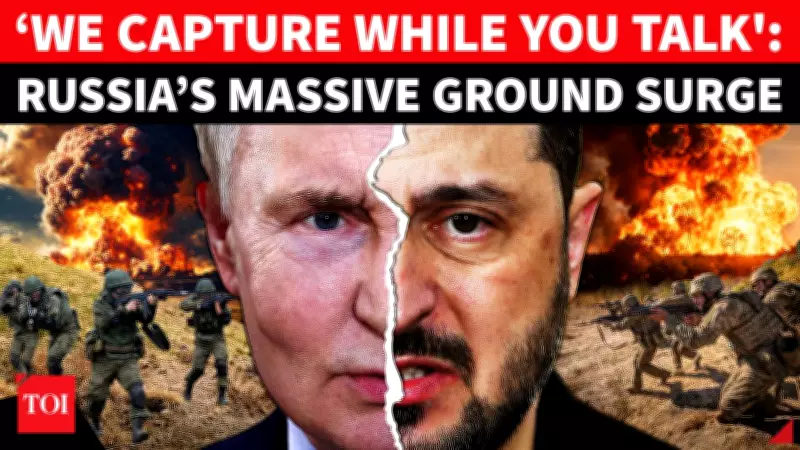
Russia Unleashes 'Non-Stop' Multi-Front Assault, Leaving Kyiv in Shock
In a dramatic escalation of the ongoing conflict, Russia has launched what it describes as a 'non-stop' multi-front assault, catching Ukrainian forces off guard and intensifying hostilities across several regions. The offensive, characterized by coordinated advances from multiple battlegroups, has resulted in significant territorial gains and heavy casualties, according to official statements from Moscow.
Significant Territorial Gains Reported
The Russian Defence Ministry has announced that its forces successfully captured eight settlements between February 14 and 20, spanning the Sumy, Zaporizhzhia, and Donetsk regions. This rapid advance underscores the scale and intensity of the new offensive, which appears to be a strategic push to consolidate control and pressure Ukrainian defenses.
In a stark assessment of the week's fighting, Russian officials claimed that more than 1,300 Ukrainian troops were killed or wounded in just one sector alone. This figure, if accurate, highlights the ferocity of the assaults and the mounting human cost of the conflict. The ministry emphasized that the advances were the result of well-coordinated operations by multiple battlegroups, suggesting a renewed and aggressive military strategy.

Diplomatic Tensions Amid Escalating Violence
As the fighting intensifies, diplomatic efforts to broker peace remain mired in uncertainty and mutual accusations. In a recent development, Russian officials have accused Kyiv of launching a drone strike on a school in Energodar, labeling it a deliberate provocation aimed at derailing potential peace talks. This allegation adds another layer of complexity to the already fraught negotiations, with both sides trading blame for escalating violence.
The timing of these accusations is particularly critical, as they come amid heightened military activity and dwindling hopes for a diplomatic breakthrough. The conflict's expansion across multiple fronts has made it increasingly difficult to establish ceasefires or engage in meaningful dialogue, with each side hardening its stance in response to perceived aggressions.
Broader Implications and Regional Impact
The 'non-stop' assault by Russia signals a potential shift in the war's dynamics, moving from sporadic engagements to sustained, large-scale operations. This could have far-reaching implications for regional stability and international relations, as other nations monitor the situation closely. The increased tempo of fighting also raises concerns about humanitarian crises, with civilian populations in affected areas facing heightened risks.
Moreover, the allegations of drone strikes and other provocations underscore the challenges in verifying facts on the ground, as both sides propagate narratives to support their strategic objectives. This information warfare complicates efforts to assess the true state of the conflict and hinders international mediation attempts.
As the situation continues to evolve, the international community watches with apprehension, hoping for a de-escalation but preparing for further volatility. The coming weeks will be crucial in determining whether diplomatic channels can be revived or if the conflict will spiral into an even more destructive phase.