

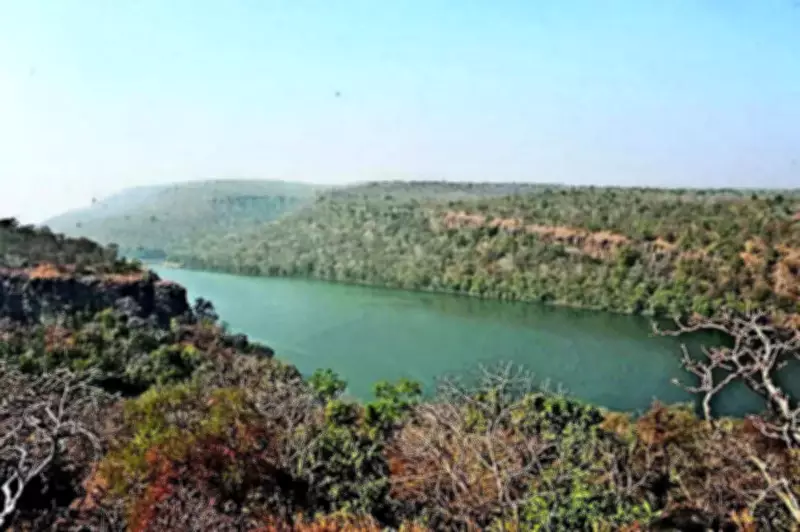
The Supreme Court on Thursday took serious note of rampant illegal sand mining inside the National Chambal Sanctuary and summoned senior Rajasthan government officials to appear personally before it. The court directed them to explain the steps being taken to curb the menace threatening the fragile river ecosystem, endangered wildlife habitat, and nearby public infrastructure.
Bench Directs Officials to Appear on May 19
A bench comprising Justices Vikram Nath, Sandeep Mehta, and Vijay Bishnoi directed Rajasthan's additional chief secretary (home) and principal secretaries of the departments of mining, finance, forest, environment, and transport & road safety to remain present before the court on May 19, the next date of hearing. They must submit individual compliance affidavits.
The apex court also directed the principal secretary of the transport and road safety department of Madhya Pradesh to appear with a detailed affidavit disclosing enforcement measures to identify and prevent operation of unregistered vehicles involved in illegal mining and transportation.

Previous Orders and CEC Recommendations
The bench specifically asked Rajasthan authorities to explain how they intend to comply with previous orders passed on April 2 and April 17 this year, besides implementing recommendations made by the Central Empowered Committee (CEC). The officers were directed to assist the court regarding timelines for implementation on the ground.
NHAI Impleaded in Proceedings
The apex court also impleaded the National Highways Authority of India (NHAI) as a party and directed it to file a detailed affidavit on measures taken to protect a bridge allegedly affected by continuous illegal mining. The bench sought clarification on why CCTV surveillance and monitoring systems should not be installed on and around the bridge for real-time tracking of illegal activities. The court directed its registry to communicate the order to NHAI's standing counsel.
Background of the Case
The proceedings arise from a suo motu petition registered by the Supreme Court after taking cognisance of media reports highlighting large-scale illegal sand mining in and around the sanctuary, which spans Rajasthan, Madhya Pradesh, and Uttar Pradesh. The sanctuary is one of India's most ecologically sensitive riverine ecosystems and a last surviving habitat of the critically endangered gharial.
On April 17, the Supreme Court laid down a stringent legal and operational framework to tackle organised illegal mining in the sanctuary area and directed State Pollution Control Boards to recover environmental compensation for ecological restoration.
CEC Report Highlights
In its interim report, the CEC observed that illegal mining was being carried out openly with JCB machines, tractors, dumpers, and heavy vehicles operating on river sand banks across all three states. The committee warned that unchecked mining was causing severe ecological degradation and threatening aquatic biodiversity and nesting habitats.






