Ex-Military Commander Unveils Untold Details of India's Surgical Strikes and Operation Sindoor
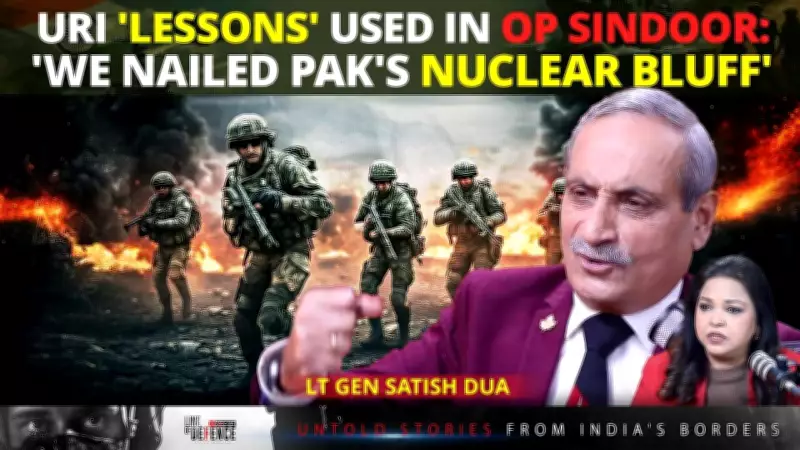
In a revealing discussion, retired Lieutenant General Satish Dua, the former Corps Commander of Srinagar and a key planner of India's surgical strikes, has shared unprecedented insights into two of the nation's most critical military operations. He detailed the 2016 surgical strikes following the Uri attack and the 88-hour Operation Sindoor, shedding light on how India strategically countered Pakistan's nuclear threats while maintaining responsible control over escalation.
The Real Story Behind the 2016 Surgical Strikes
Lt Gen Dua explained that the surgical strikes were a direct response to the Uri terror attack, marking a significant shift in India's military posture. For the first time, Indian commandos crossed into Pakistani territory, executed precise operations, and returned with zero casualties. This move was not just a tactical success but a bold statement against cross-border terrorism.
Key aspects of the surgical strikes included:

- Precision Planning: Meticulous intelligence and coordination ensured minimal risk to Indian forces.
- Strategic Impact: The operation demonstrated India's capability to strike deep inside hostile territory without triggering full-scale conflict.
- Psychological Warfare: It served as a deterrent, challenging Pakistan's assumptions about India's response thresholds.
Operation Sindoor: Demolishing Pakistan's Nuclear Bluff in 88 Hours
In Operation Sindoor, India conducted an intense 88-hour military campaign that effectively "demolished Pakistan's nuclear bluff," as described by Lt Gen Dua. This operation showcased India's ability to call out nuclear threats while avoiding uncontrolled escalation, a delicate balance in high-stakes conflict zones.
Highlights of Operation Sindoor:
- Rapid Execution: The 88-hour timeframe underscored India's swift and decisive military readiness.
- Escalation Control: Despite the aggressive stance, India maintained responsible command to prevent broader conflict.
- Strategic Messaging: The operation sent a clear message about India's resolve and capability to handle nuclear-backed aggression.
How India Took the Bull by the Horns
Lt Gen Dua emphasized that these operations represent a broader strategy where India has "taken the bull by the horns" in dealing with Pakistan. By proactively addressing threats and demonstrating military prowess, India has shifted from a reactive to a proactive stance in regional security dynamics.
This approach involves:
- Risk Management: Balancing bold actions with careful escalation control to avoid unintended consequences.
- Diplomatic Leverage: Using military successes to strengthen India's position in international forums.
- National Security Doctrine: Integrating such operations into a cohesive strategy for long-term defense.
The revelations from Lt Gen Dua offer a rare glimpse into the planning and execution of India's most sensitive military actions, highlighting the nation's evolving defense capabilities and strategic foresight in complex geopolitical landscapes.