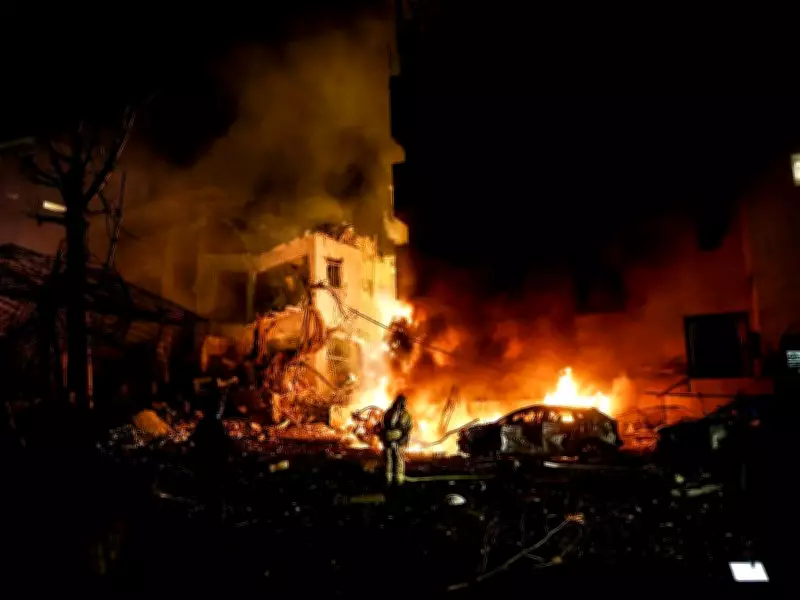
Smoke Billows from Israeli Military HQ Amid Iran's Retaliatory Strikes
In a dramatic escalation of tensions in the Middle East, smoke was observed rising from Israel's General Staff building in Tel Aviv on Saturday, as Iran continued its retaliatory attacks against the country. The incident, which unfolded amid a series of strikes, has heightened fears of a broader regional conflict.
Details of the Attack
According to reports, the smoke emanated from the General Staff building, a key military headquarters for the Israel Defense Forces (IDF). The building is located in the Kirya military complex in central Tel Aviv, a highly secure area that houses critical defense infrastructure. While the exact cause of the smoke remains under investigation, it is believed to be linked to the ongoing retaliatory strikes launched by Iran in response to recent Israeli actions.
Iran's Retaliatory Campaign: Iran has been conducting a series of attacks against Israel, citing retaliation for what it describes as Israeli aggression, including alleged strikes on Iranian targets in Syria and other locations. These attacks have included missile and drone launches, with some intercepted by Israeli air defenses, while others have caused damage and casualties.

Immediate Aftermath and Response
Israeli authorities have confirmed the incident at the General Staff building but have not provided detailed information on casualties or structural damage. Emergency services were quickly dispatched to the scene to assess the situation and contain any potential hazards. The IDF has been on high alert, with air defense systems activated across the country to counter further threats.
Regional Implications: The smoke from the General Staff building underscores the severity of the current conflict, as it targets a symbol of Israeli military power. This development comes amid a backdrop of increasing hostilities, with both sides exchanging threats and military actions that risk drawing in other regional actors.
Broader Context of the Conflict
The ongoing tensions between Israel and Iran have deep roots, with Iran supporting proxy groups like Hezbollah in Lebanon and Hamas in Gaza, while Israel has conducted numerous operations against Iranian interests. Recent months have seen a spike in violence, including:
- Israeli airstrikes on Iranian facilities in Syria.
- Iranian-backed attacks on Israeli shipping in the Red Sea.
- Diplomatic efforts by international mediators to de-escalate the situation, which have so far yielded limited results.
The smoke incident at the General Staff building is seen as a potential turning point, as it directly impacts a core military installation, raising concerns about further escalation. Analysts warn that if such attacks continue, they could lead to a full-scale war, with devastating consequences for the Middle East and global stability.
International Reactions
Global leaders have expressed alarm over the latest developments. The United Nations has called for an immediate ceasefire and urged both parties to exercise restraint. Key allies of Israel, including the United States, have reaffirmed their support for Israel's right to self-defense, while also cautioning against actions that could spiral out of control.
Iran, for its part, has stated that its retaliatory measures are justified and will continue until its demands are met. The situation remains fluid, with ongoing monitoring by international observers and media outlets reporting from the ground.
As the conflict unfolds, the world watches closely, hoping for a diplomatic resolution to prevent further loss of life and regional destabilization. The smoke from Israel's General Staff building serves as a stark reminder of the high stakes involved in this protracted confrontation.