The Tibetan Youth Congress (TYC) on Sunday strongly criticized the upcoming visit of Chinese Foreign Minister Wang Yi to India for the BRICS National Security Advisers' meeting, asserting that the international community should not overlook the Tibet issue while engaging with China on diplomatic and strategic matters.
TYC Leaders Address Press Conference in Dharamsala
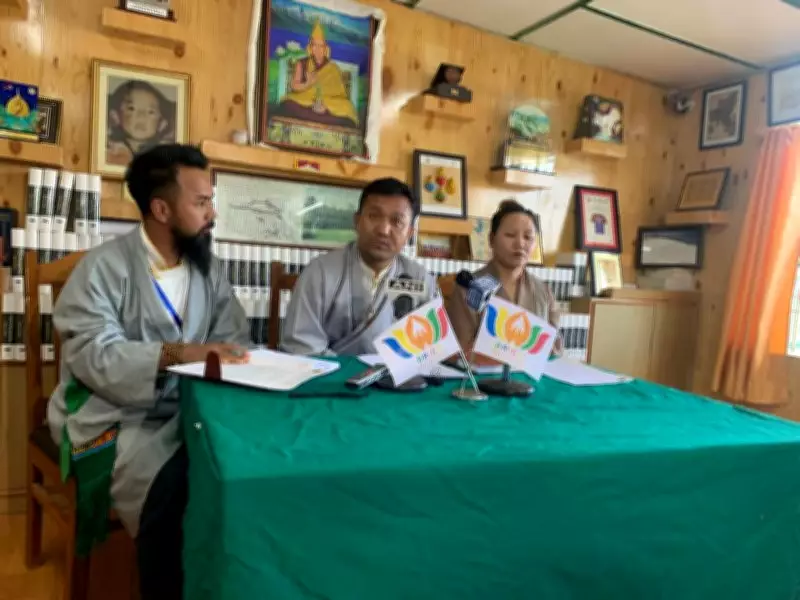
Addressing a press conference in Dharamsala, TYC President Tsering Chomphel, accompanied by General Secretary Tenzin Lobsang and Organisational Secretary Tsamchoe, said China continues to project itself as a responsible global power despite what they described as decades of repression and occupation in Tibet. Wang Yi is visiting New Delhi from June 22-23 to attend the BRICS National Security Advisers' meeting.
Chomphel alleged that Tibet has remained under Chinese occupation for more than seven decades and accused Beijing of pursuing policies aimed at eroding Tibetan identity, culture, language and religion. He claimed that China has intensified efforts to assimilate Tibetans through various political and administrative measures while denying them the right to determine their own future.

Concerns Over China's Ethnic Unity Law
The TYC leaders expressed particular concern over China's recently implemented "Ethnic Unity Law," which they said is designed to accelerate the assimilation of non-Chinese communities and further tighten state control over Tibet and other regions. According to them, the legislation threatens the survival of Tibet's unique cultural and religious heritage.
Referring to ongoing discussions between Indian and Chinese officials on border-related issues, Tenzin Lobsang argued that the India-China border dispute is directly linked to China's occupation of Tibet. He said India and Tibet historically shared a peaceful border and that present-day tensions emerged only after Tibet was occupied by China in the 1950s.
Border Dispute and Tibet Link
The TYC leadership maintained that efforts to resolve the border issue without addressing Tibet would not provide a lasting solution. The TYC leaders called upon the Government of India, democratic nations and international organisations to raise concerns about human rights and cultural freedoms in Tibet.
Reaffirming their commitment to the Tibetan cause, the TYC leaders said the Tibet issue remains a matter of international peace, security and decolonisation, and called for sustained global support for the aspirations of the Tibetan people.