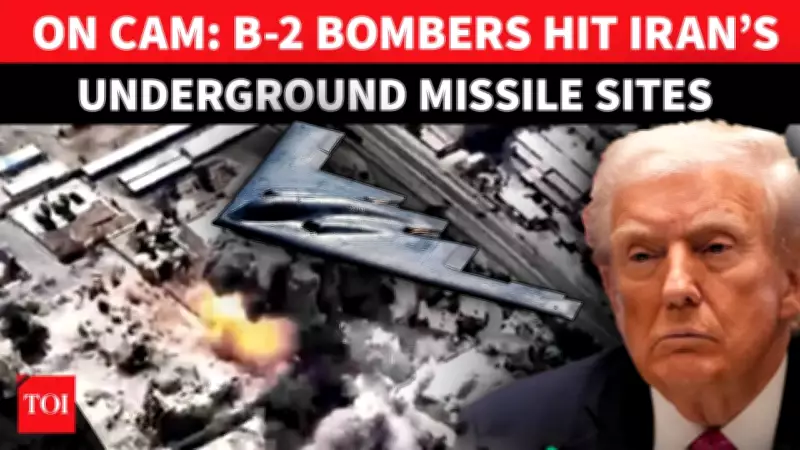
US Unleashes B-2 Stealth Bombers in Major Escalation Against Iran
The United States has confirmed a significant military escalation in the Middle East, deploying B-2 stealth bombers to strike Iran's underground ballistic missile facilities. This operation marks a dramatic intensification of the ongoing conflict, with long-range aircraft flying from the U.S. mainland to deliver precision attacks on hardened targets.
Massive Airstrike Campaign Details
According to Pentagon statements, American forces launched approximately 900 strikes within a 12-hour period, targeting Iran's subterranean missile sites with 2,000-pound bunker-buster bombs. Simultaneously, Israel conducted its own offensive, carrying out 1,200 strikes in a single day, highlighting a coordinated effort against Iranian military infrastructure.
The use of B-2 bombers, known for their stealth capabilities and long-range strike capacity, underscores the seriousness of this operation. These aircraft are designed to penetrate heavily defended airspace and deliver devastating payloads on critical targets, making them a key asset in this high-stakes confrontation.

Casualties and Denials Amid Rising Tensions
The Pentagon has acknowledged American casualties resulting from the raids, though specific numbers remain undisclosed. In a related development, U.S. officials have firmly rejected Iranian claims of successful hits on a U.S. aircraft carrier, dismissing these assertions as propaganda intended to bolster morale.
This denial comes amidst a backdrop of increasing hostilities, with naval clashes and threats to tankers in the strategically vital Strait of Hormuz. These maritime incidents have heightened fears of a broader regional war that could disrupt global energy supplies, given the strait's role as a critical chokepoint for oil shipments.
Regional and Global Implications
The escalation has sent shockwaves through international diplomatic circles, with concerns mounting over the potential for a full-scale conflict. Key implications include:
- Energy Security Risks: Disruptions in the Strait of Hormuz could lead to spikes in global oil prices, affecting economies worldwide.
- Military Alliances: The involvement of both U.S. and Israeli forces suggests a strengthened coalition against Iranian military ambitions.
- Humanitarian Concerns: Prolonged hostilities may exacerbate civilian suffering and displacement in the region.
As tensions continue to simmer, the international community watches closely, hoping for de-escalation while preparing for further developments in this volatile situation.