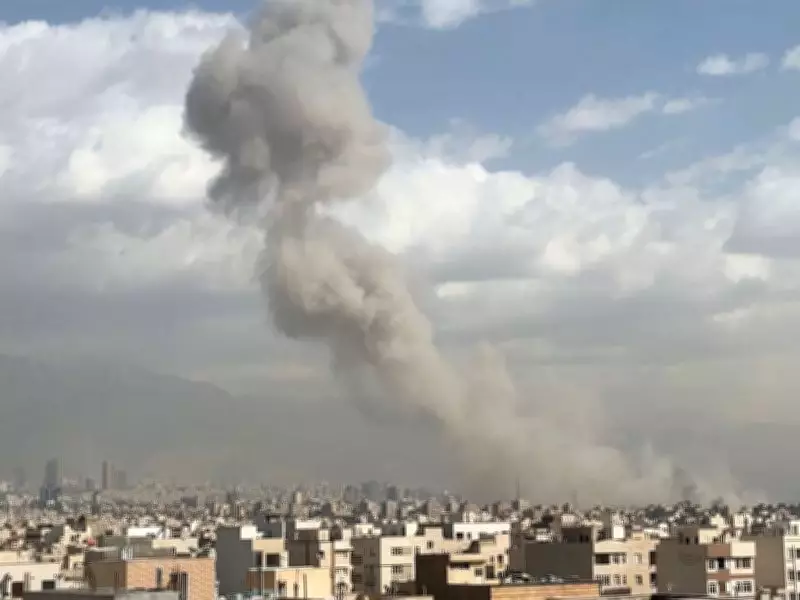
From Covert Operations to Open Conflict: The US-Israel-Iran Escalation
The geopolitical landscape in the Middle East has been dramatically reshaped by a series of clandestine actions that have pushed tensions between the United States, Israel, and Iran into the realm of open conflict. This escalation, rooted in years of covert warfare, involved high-stakes operations such as magnetic bombings, mysterious targeted shootings, and the audacious theft of Iran's nuclear archive.
The Covert Campaign: A Timeline of Provocations
Over the past decade, a shadow war unfolded, characterized by sophisticated attacks aimed at undermining Iran's nuclear and military capabilities. Magnetic bombs, attached to vehicles of Iranian nuclear scientists and military officials, became a hallmark of this campaign, resulting in several fatalities and widespread fear. These bombings were often attributed to Israeli intelligence agencies, operating with tacit or explicit support from the US.
Simultaneously, a pattern of mysterious shootings emerged, targeting key figures within Iran's Revolutionary Guard and nuclear program. These incidents, carried out with precision and often leaving little trace, further destabilized Iran's security apparatus and signaled a relentless pressure campaign.

The Nuclear Archive Heist: A Turning Point
Perhaps the most brazen operation was the theft of Iran's nuclear archive in 2018. Israeli Mossad agents conducted a daring raid in Tehran, seizing a vast trove of documents and files detailing Iran's past nuclear weapons research. This theft provided concrete evidence of Iran's clandestine nuclear ambitions, which had long been suspected but not fully proven.
The archive's contents were later disclosed by Israel and the US, leading to increased international scrutiny and sanctions against Iran. This act not only humiliated the Iranian regime but also emboldened hardliners in Washington and Tel Aviv, who argued for a more aggressive stance.
Escalation to Open Conflict
The cumulative effect of these covert operations created a volatile environment. Iran, feeling besieged and provoked, began to retaliate more overtly, targeting US and allied interests in the region through proxy militias and direct attacks. This included strikes on oil facilities, shipping lanes, and military bases.
In response, the US and Israel ramped up their military posturing, conducting airstrikes and deploying additional forces to the Middle East. The covert war, once fought in the shadows, spilled into the open, with both sides engaging in direct confrontations that risked a full-scale regional war.
Implications for Global Security
This transition from covert to open conflict has profound implications for global security. It underscores the dangers of prolonged shadow wars, where miscalculations can lead to unintended escalations. The Middle East, already a hotspot of instability, now faces heightened risks of broader conflict involving major powers.
Moreover, the theft of the nuclear archive has complicated diplomatic efforts, as it hardened positions on all sides. Future negotiations on Iran's nuclear program will likely be more contentious, with trust at an all-time low.
In conclusion, the covert war waged by the US and Israel against Iran, through magnetic bombs, shootings, and the nuclear archive theft, has culminated in an open conflict that threatens to destabilize the region further. As tensions continue to simmer, the world watches closely, hoping for de-escalation but preparing for the worst.