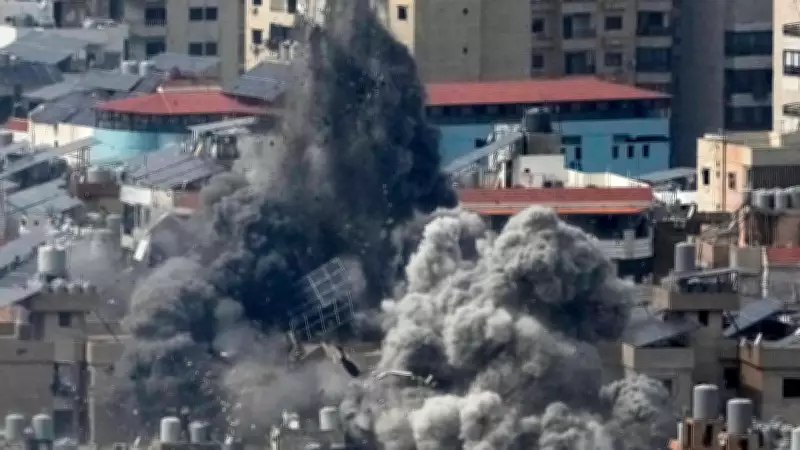
Middle East Conflict Escalates with Naval Clash and Tehran Strikes
The ongoing war between the United States, Israel, and Iran has entered a critical phase, marked by dramatic military escalations and severe regional spillover. On day eight of the conflict, Israel launched extensive airstrikes on Tehran, while Iran retaliated with missile attacks targeting Israel and its Gulf neighbors. In a significant naval development, a US submarine torpedoed and sank an Iranian warship in the Indian Ocean, heightening tensions at sea.
Military Actions and Casualties Mount
Israeli forces confirmed a "broad-scale wave of strikes" on government facilities in Tehran, with Iranian state media reporting explosions in the capital. Concurrently, Iran fired missiles toward Saudi Arabia's Prince Sultan Air Base, which hosts US military personnel, though Saudi air defenses intercepted the attack. The conflict has resulted in over 1,000 reported deaths in Iran, dozens in Lebanon and Israel, and six US troop fatalities, underscoring the growing humanitarian toll.
Israel has accused Iran of using cluster munitions, weapons that release bomblets over wide areas and pose long-term risks to civilians. Israeli military spokesperson Nadav Shoshani labeled this a potential war crime, though neither country is a signatory to the Convention on Cluster Munitions.

US Deployment and Political Backing
The United States is deploying the aircraft carrier USS George H. W. Bush to the Middle East, marking the third US carrier sent to the region as tensions escalate. In Washington, Senate Republicans blocked a war powers resolution aimed at limiting President Donald Trump's authority, signaling strong political support for continued military operations. The White House maintains that no US ground troops are currently planned but has not ruled out future options.
Global Economic and Diplomatic Fallout
The conflict is severely disrupting global trade and energy supplies. Missile attacks near the Strait of Hormuz have reduced tanker traffic by nearly 90%, causing oil prices to spike. Brent Crude surged to $92.69 per barrel, an 8.5% increase in a single day and nearly 30% over the week, unsettling financial markets worldwide. Shipping giants are suspending routes due to heightened security risks.
Diplomatically, Iran's Foreign Minister Abbas Araghchi held phone calls with External Affairs Minister S Jaishankar and others, condemning US and Israeli actions as "military aggression" and urging international condemnation. Araghchi accused the US of launching strikes from Arab territories that killed civilians, including children, and warned of retaliatory actions against American bases.
Regional Instability and Leadership Uncertainty
Inside Iran, strikes have targeted Revolutionary Guard facilities, with state television showing widespread destruction in Tehran and Qom. The mourning ceremony for Supreme Leader Ayatollah Ali Khamenei, killed at the war's onset, has been postponed amid relentless attacks, adding uncertainty to Iran's political future as leadership scrambles to choose a successor. The United Nations reports tens of thousands have fled Tehran, exacerbating the humanitarian crisis.
The conflict has drawn in regional actors, with NATO air defenses in Turkey intercepting a ballistic missile from Iran, and involvement from Bahrain and Kuwait. As the situation unfolds, global attention remains focused on military developments, diplomatic efforts, and the escalating economic impact of this volatile Middle East crisis.