US-Israel Joint Operation Epic Fury Kills Iran's Supreme Leader in Massive 900-Strike Assault
In one of the most dramatic escalations of Middle East tensions in decades, the United States and Israel launched a coordinated military operation that officials confirm resulted in the death of Iran's Supreme Leader, Ayatollah Ali Khamenei. The assault, dubbed Operation Epic Fury, involved nearly 900 strikes within the first 12 hours of combat, marking a significant turning point in regional conflicts.
Operation Epic Fury: A Coordinated Land, Air, and Sea Assault
The operation commenced at approximately 9:30 AM local time in Tehran, with American and Israeli forces executing synchronized attacks from multiple fronts. According to an unnamed US official speaking to Fox News, the strikes were conducted while American forces simultaneously defended against hundreds of incoming Iranian ballistic missiles. President Donald Trump characterized the campaign as "major combat operations," explicitly aimed at dismantling Iran's military capabilities and eliminating what he described as the threat of Tehran developing nuclear weapons.
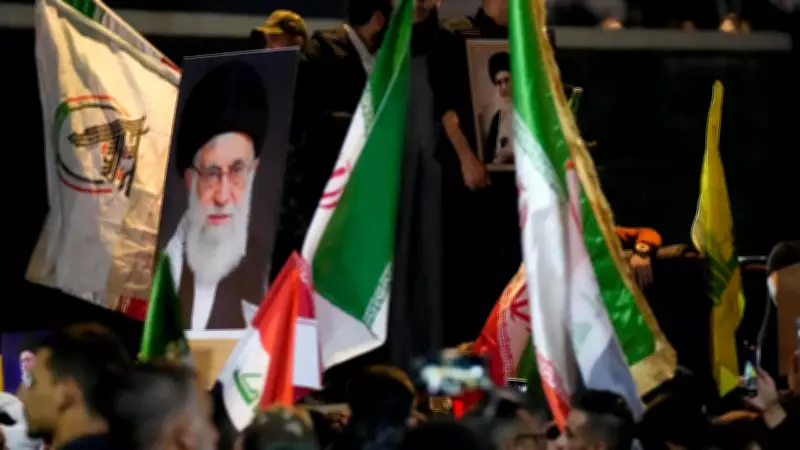
Iran later formally confirmed the death of Ayatollah Ali Khamenei, the 86-year-old cleric who had ruled Iran since 1989 and wielded ultimate authority over the country's political and military structures. One of the earliest targets struck was near Khamenei's compound, highlighting the precision and strategic focus of the operation.

900 Strikes in 12 Hours: Unfolding the Military Campaign
The scale of Operation Epic Fury is staggering, with American forces carrying out nearly 900 strikes in just the first half-day of fighting. Key targets included:
- Revolutionary Guard command facilities
- Missile and drone launch sites
- Air defence systems
- Military airfields across Iran
Despite Iran firing approximately 300 missiles during the same 12-hour period, American bases reported no casualties and only minimal damage. This resilience comes despite Iran's arsenal, which is believed to include roughly 2,000 long-range missiles and another 2,000 shorter-range systems, replenished after previous US and Israeli strikes last summer.
The stated objective of Operation Epic Fury, according to the US official, is to ensure Iran no longer possesses the "capability to attack its neighbours: no drones, no missiles, no navy." Washington also claims knowledge of where Iran is stockpiling highly enriched uranium, though the official admitted these sites are difficult to reach. With several Iranian air defence systems remaining operational, further suppression efforts are expected before US and Israeli aircraft can operate freely over Iranian airspace.
The campaign could potentially last "a couple of weeks," though President Trump retains the option of ending it sooner based on strategic assessments.
Iran Retaliates with Missile and Drone Attacks Across the Region
In response to the devastating strikes, Tehran launched missile and drone attacks targeting Israel and US installations across the Middle East. Key incidents include:
- Bahrain: A missile targeted the headquarters of the US Navy's Fifth Fleet, though US officials claimed the strikes hit "empty warehouses" without affecting operational aims.
- Kuwait: A drone strike on the main international airport injured several employees, while shrapnel wounded troops at Ali Al-Salem air base.
- Qatar: Explosions were reported, though specific damage assessments remain ongoing.
- Jordan: Successfully intercepted dozens of drones and ballistic missiles.
- Saudi Arabia: Repelled attacks targeting Riyadh and its eastern region.
- Israel: The military reported "dozens" of Iranian missiles fired, many of which were intercepted. Emergency service Magen David Adom reported 89 people lightly injured.
Iranian state media, citing the Red Crescent, reported at least 201 people killed and more than 700 injured in the initial wave of strikes. A local governor told state television that more than 80 people were killed at a girls' school in southern Iran, with dozens wounded. The US military stated it is reviewing reports of civilian casualties.

Trump Calls for Iranian Uprising Amidst Broader Confrontation
In an eight-minute video posted online, President Trump framed Operation Epic Fury as part of a broader confrontation with Iran's leadership dating back to the 1979 Islamic Revolution. He directly addressed the Iranian people, stating, "When we are finished, take over your government. It will be yours to take. This will be probably your only chance for generations."
The strikes occurred just days after renewed US-Iran talks over Tehran's nuclear programme stalled. In recent months, Washington had significantly built up its military presence in the region, including deployments of the aircraft carriers USS Abraham Lincoln and USS Gerald R. Ford, alongside guided-missile destroyers and more than 10,000 additional troops.
Regional Fallout: Airspace Closures and Economic Implications
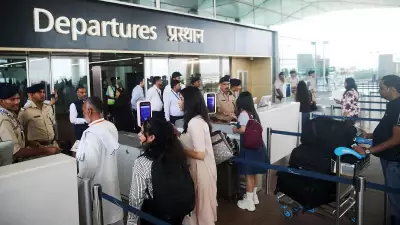
The conflict has triggered widespread airspace closures across Israel, Iran, Qatar, Kuwait, Bahrain, Iraq, and Syria, leaving tens of thousands of travellers stranded. Global markets are bracing for potential disruption to shipping through the Strait of Hormuz, through which approximately one-third of the world's seaborne oil exports pass. This economic dimension adds another layer of complexity to an already volatile situation.
As Operation Epic Fury continues to unfold, the international community watches closely, anticipating further developments in what has become one of the most significant military confrontations in the Middle East in recent history.