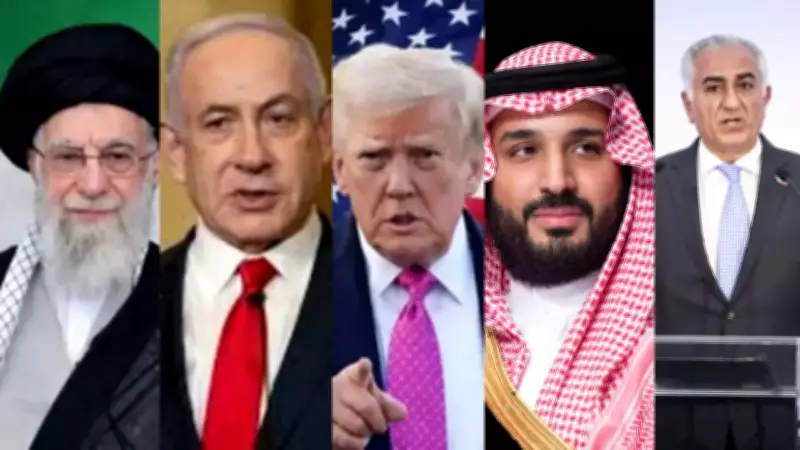
US-Israel Coordinated Military Strikes Target Iran, Resulting in Significant Casualties
Following an extensive month-long military buildup, the United States and Israel executed synchronized strikes against Iran on Saturday, leading to the confirmed deaths of at least forty individuals. This aggressive military action unfolds against the complex backdrop of ongoing diplomatic negotiations between Washington and Tehran concerning Iran's contentious nuclear program. Simultaneously, the Islamic Republic has been grappling with months of substantial domestic protests challenging its authority.
Immediate Fallout and Regional Escalation
Initial reports indicate that missiles struck the US navy headquarters located in Bahrain, with subsequent explosions audibly reported in major Gulf cities including Abu Dhabi and Doha. In a retaliatory move branded 'Truthful Promise 4', Iran launched attacks targeting US military installations spread across the Middle East. The longstanding enmity between the United States and Iran, rooted in the 1979 Islamic Revolution and the subsequent US embassy hostage crisis in Tehran, has now escalated into open military confrontation, plunging the region into a severe crisis.
Key Figures and Their Stances in the Escalating Conflict
US President Donald Trump: In a televised address delivered via Truth Social shortly after the strikes commenced, President Trump confirmed the military operation aimed at Iran's nuclear and military infrastructure. He issued a stark ultimatum to Iranian forces, including the Islamic Revolutionary Guard, offering complete immunity in exchange for surrender or warning of "certain death." Addressing the Iranian populace directly, Trump positioned himself as an agent of liberation, urging citizens to stay sheltered during the bombardment and to subsequently "take over your government." This action aligns with his consistent hardline stance, including the 2018 withdrawal from the international nuclear deal and the 'maximum pressure' doctrine designed to cripple Iran economically.

Ayatollah Ali Khamenei: The office of Iran's 86-year-old Supreme Leader in Tehran was among the initial targets, though he was reportedly relocated to a secure site prior to the attack. Khamenei, in power since 1989, embodies the Islamic Republic's doctrine of resistance against the US and Israel. He has overseen the expansion of Iran's regional influence and advances in its nuclear program, consistently framing uranium enrichment as a sovereign right. He remains deeply skeptical of diplomacy with the West and has warned that any American-initiated war would escalate into a broader regional conflict.
Reza Pahlavi: The former crown prince and son of the last Shah has emerged as a prominent advocate for regime change from his base in the United States. During recent protests, he has called for Iranians to demonstrate and has urged Western support to unseat the clerical establishment, promoting a vision for a secular, democratic Iran. However, his legacy and past associations, including a controversial visit to Israel, render him a divisive figure within the opposition movement.
Israeli Prime Minister Benjamin Netanyahu: Netanyahu characterized the joint operation as a necessary defensive and strategic move to eliminate the "existential threat" posed by Iran. He has long cited Iran's nuclear ambitions and support for militant groups as a direct danger to Israel. In his address, he directly appealed to the Iranian people to rise against their government, a recurring theme in his rhetoric aimed at fostering internal unrest and potentially restoring pre-revolutionary ties.
Mohammed bin Salman: Saudi Arabia's de facto ruler maintains a cautious regional stance. While historically viewing a weaker Iran as favorable, Riyadh fears that a destabilized Iran could trigger widespread regional chaos. Despite past fiery rhetoric, Saudi Arabia has recently pursued rapprochement with Iran, brokered by China, and has prioritized stability, reportedly urging Washington to exercise restraint prior to the strikes.

The coordinated US-Israel strikes mark a severe escalation in a decades-long geopolitical struggle, directly impacting nuclear diplomacy, regional stability, and the internal dynamics of Iran amidst significant civil unrest. The international community watches closely as the situation develops, with potential ramifications for global energy markets and security architectures.